Thankful for Nuclear Power
Everyone can be thankful for the existence of nuclear power. Nuclear provides great quantities of electricity without simultaneously providing dirty air.
In this video, the Asthma Society of Canada testifies in favor of relicensing Bruce Power nuclear plants. In the first part of the video, Mr. Oliphant of the Asthma Society describes the prevalence and health consequences of asthma. The Asthma Society used to focus on helping people manage asthma through medication. It is now taking a more pro-active role by helping society minimize asthma. The Asthma Society encourages technologies that do not lead to dirty air or global warming.
Starting at 5:50 (five minutes, fifty seconds) Oliphant describes how energy choices have health effects, and these effects must be considered. Ontario phased out coal generation: they could not have done this without nuclear power. The last half of the presentation is a strong message of gratitude for the clean air gifts of nuclear power!
Enjoy the video. Enjoy the turkey. Enjoy clean power from nuclear plants!
We all have much to be thankful for. I will also say:
We nuclear advocates especially have a lot to be thankful for. We know that we are making the world a better place.
Showing posts with label Canada. Show all posts
Showing posts with label Canada. Show all posts
Thursday, November 26, 2015


Wednesday, December 12, 2012
Carnival 134 plus Great Video from Bruce Power
Carnival #134 is up, and it is the first time that the blog Things Worse than Nuclear Power has hosted the Carnival. The Things Worse blog is written by two MIT engineers: grad student and recent graduate. They write clearly and are not afraid to tackle the big subjects: the Fukushima butterfly scare, things worse than Chernobyl.
Read the latest Carnival and check out the great blog!
Speaking of "Things Worse Than Nuclear Power" -- there's coal.
Bruce Power's thirty-second commercial makes a clear case for nuclear power compared to fossil fuels and air pollution. A tip of the hat to Rod Adams, who featured this video on his blog a few days ago.
Wednesday, November 21, 2012
Vermont Yankee Meetings As Described on Other Blogs
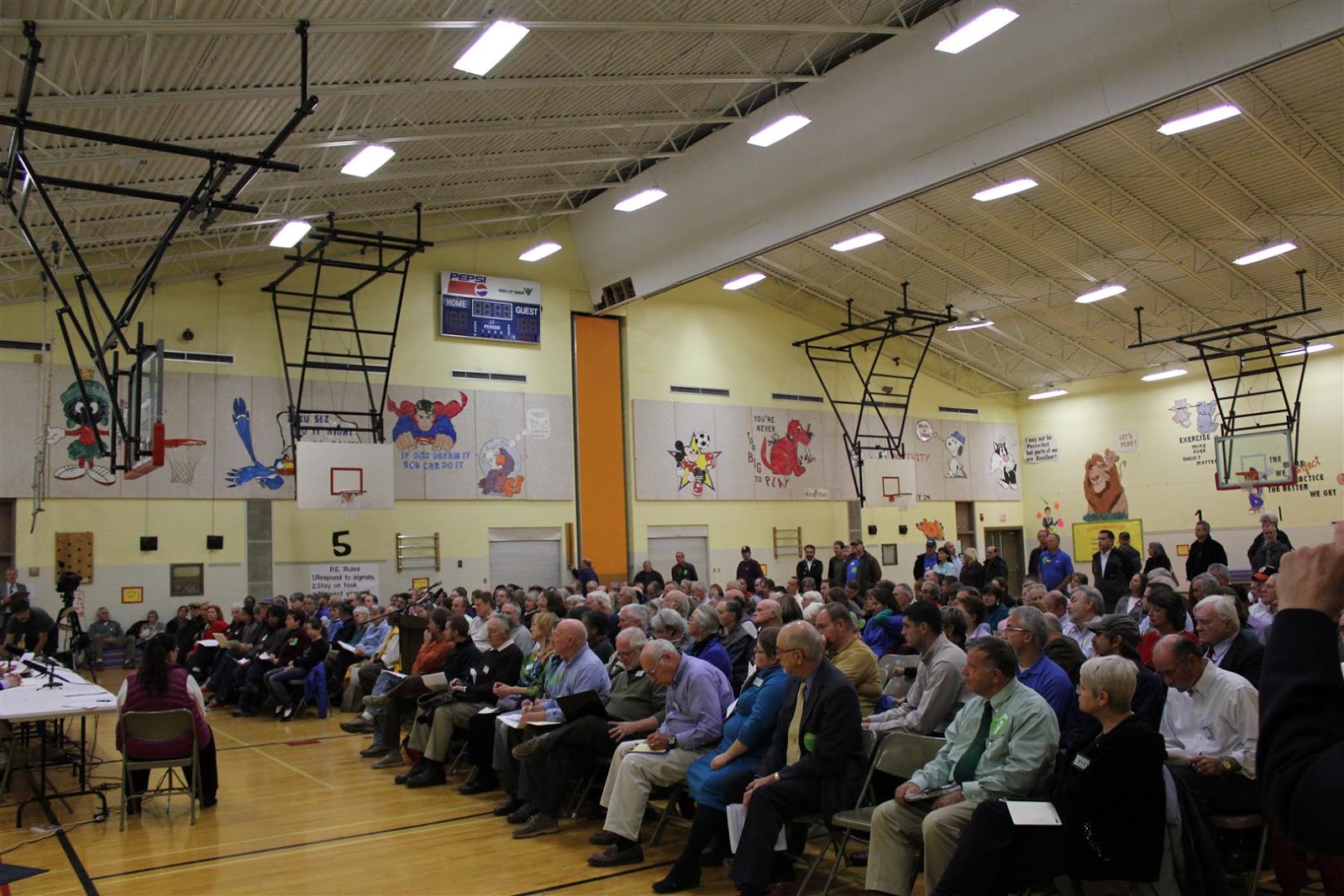
Vermont Yankee Supporters at Public Service Board Hearing: ANS Nuclear Cafe
Howard Shaffer's blog about the November 7, meeting, posted at ANS Nuclear Cafe, tells all...the preparations, the pizza, the success, the lessons learned. A great post! (as you knew it would be)
Nuclear power in Vermont and Ontario: the locals fight back, intelligently: Canadian Energy Issues
Steve Aplin writes about our fight for Vermont Yankee, and a similar fight about a fuel pellet plant in Toronto. As Aplin writes: the Vermont Yankee fight might provide examples on how to use intelligence and reason—faculties available to all humans—to overcome medieval superstition.
Yes. So true.
Note and full disclosure: Steve Aplin, Rod Adams and I travelled through France together in 2010. We are friends.
Gosh. I have a hard time quoting Aplin's post. It's surprisingly hard to accept praise. Okay. One quote. This is about the Nov 7 statements made as guest posts on this blog, and about me: The writers (of the statements) represent a diverse range of views and backgrounds, but are all in favour of keeping the plant running. When you read the articles, you will immediately note the intelligence and quiet passion with which the writers present their views. To me, this is no surprise. Meredith embodies the western critical intellectual tradition at its best.
Okay. That's enough. I'm blushing.
I also want to thank Cheryl Twarog for her kind note on the Aplin blog.
On the Atomic Insights Radar, November 19, 2012: Atomic Insights
In this blog post about various nuclear issues, Rod Adams reviews the environmental advocacy of John Droz, who is a thorn in the side of the wind industry. He comments on the latest predictions of the rising price of natural gas. He reviews the work we are doing in Vermont, and quotes Steve Aplin about me. He wishes us well on the interactive hearing.
This is a wonderful post about the shape of the world of energy. And...this just in! The Energy Department has just released the funding (cost-sharing funds) for the Babcock and Wilcox modular mPower Reactor. Since this is the project that employs Rod Adams, it is good news for Rod and his friends, as well as Very Good News for the nuclear industry!
------------
Update: I wrote " yes so true"above, and I meant that the opponent's arguments were superstition, and we must use reason to combat them. When I reread this, "yes. so true" was not very clear.
The opponent's arguments are be-afraid. This is a mark of superstition, unless supported by facts. We must use our reason to combat any type of "be afraid" that is not supported by evidence. People near nuclear plants don't get more cancers than people anywhere else. Alas, history shows that you can teach people to be-afraid...of anything. If you work hard enough at teaching them. End Update.
Tuesday, October 2, 2012
Three Pro-Nuclear Events: Hearing, Marches and Rallies in Tennessee, Canada and Japan
The World Tour
Okay, I'm your friendly neighborhood pro-nuclear blogger, and this time I'm not writing about Vermont. Here we go on a world pro-nuclear tour! There were three pro-nuclear events, none in Vermont, and they don't get much attention in most of the media.
Tennessee MOX Hearing
ANS members and ANS student members testified at a hearing about MOX fuel in Tennessee. The Tennessee valley hearings are noted for anti-nuclear "zombies." These are people wearing torn clothes and fake blood, and they come to hearings and make about as much sense as real zombies would make...if there were real zombies.
At this hearing, ANS members were informed, articulate and visible. Many wore blue ANS t-shirts, visible in the picture at the left. At the hearing, nuclear and anti-nuclear people spoke politely, and some even chatted and exchanged information after the meeting.
The meeting was livetweeted using the hashtag #MOXChat.
Laura Scheele of ANS Nuclear Cafe wrote an excellent retrospective about the meeting. The future of nuclear at #MOXChat at ANS Nuclear Cafe.
Oh yes, I suspect the zombies might have heard that the ANS members would be at the meeting, because....no zombies appeared.
Gentilly 2 Pro-Nuclear March in Quebec
 Hydro-Quebec owns the Gentilly-2 nuclear plant, and Hydro-Quebec recently decided to shut the plant down. The people in the area did not take this quietly. This Sunday they marched in favor of keeping the power plant open. You can see pictures of the march on this pro-Gentilly FB page, which has over 1000 "likes":
https://www.facebook.com/pages/Nous-appuyons-la-réfection-de-la-centrale-nucléaire-Gentilly-2/108833445800977
 I am particularly fond of these pictures which I "borrowed" from the FB page.
One picture talks of the fate of 800 families, and two pictures are about the children (Les Enfants) of Gentilly.
Les Enfants? What is that about? Well, there's a film about Gentilly which focused on birth defects, childhood cancer, and so forth, all supposedly caused by the plant. The Canadian Nuclear Safety Commission wrote a one-pager about the falsehoods in the film. The one-pager is an excellent answer to many falsehoods about nuclear energy.
The young people in the parade and with their pictures on the poster are another answer to these falsehoods.

In the interview below, local officials speak of their support for the plant and the announcer says 1000 people are there for the march.
http://staging.fr.video.canoe.tv/video/1869420841001/#1869485339001
Pro-Nuclear in Japan
Well, this is NEVER going to get into the main media, I suspect. But here's a 1000-person pro-nuclear rally in Japan, in front of the Prime Ministers house! It's only reported in somethng called The Liberty Web, but it happened all the same.
1000 people gather for a pro-nuclear power demonstration on Sept 25. One of the spokesmen presented a statement to the cabinet, including these words: “We have heard from the factory mangers that they have had to fire part-time workers, because the company took measures to save electricity. However, the victims of this policy could not speak up on account of the flooded denuclearization media coverage."
Not a demonstration, but a Japanese professor is battling the flood of mis-information in a letter and blog post. You can read Jun Takeda's post here. Here's a quote: Based on radioactivity dosage, the risk of Fukushima residents developing thyroid cancer is less than one person per 10 million per year. Since the population of Fukushima Prefecture is two million, thyroid cancer will not result from these low doses. Truly, people with only amateur knowledge of radioactivity need to stop paralyzing the citizens of Fukushima and the entire country with fear.
All Over the World
All over the world, people are standing up in public and supporting nuclear power.
The times they are changing, and it's about time.
But, before we get started:
Something You Can Do Right Now
It takes almost no time to vote Yes on the question: Should the World Increase Its Reliance on Nuclear Energy at this Wall Street Journal poll. Do it now!
And the tour begins in Tennessee.
Tennessee MOX Hearing
 |
| Hearing room at the MOX meeting |
At this hearing, ANS members were informed, articulate and visible. Many wore blue ANS t-shirts, visible in the picture at the left. At the hearing, nuclear and anti-nuclear people spoke politely, and some even chatted and exchanged information after the meeting.
The meeting was livetweeted using the hashtag #MOXChat.
Laura Scheele of ANS Nuclear Cafe wrote an excellent retrospective about the meeting. The future of nuclear at #MOXChat at ANS Nuclear Cafe.
Oh yes, I suspect the zombies might have heard that the ANS members would be at the meeting, because....no zombies appeared.
Gentilly 2 Pro-Nuclear March in Quebec
https://www.facebook.com/pages/Nous-appuyons-la-réfection-de-la-centrale-nucléaire-Gentilly-2/108833445800977
One picture talks of the fate of 800 families, and two pictures are about the children (Les Enfants) of Gentilly.
Les Enfants? What is that about? Well, there's a film about Gentilly which focused on birth defects, childhood cancer, and so forth, all supposedly caused by the plant. The Canadian Nuclear Safety Commission wrote a one-pager about the falsehoods in the film. The one-pager is an excellent answer to many falsehoods about nuclear energy.
The young people in the parade and with their pictures on the poster are another answer to these falsehoods.
In the interview below, local officials speak of their support for the plant and the announcer says 1000 people are there for the march.
http://staging.fr.video.canoe.tv/video/1869420841001/#1869485339001
Pro-Nuclear in Japan
Well, this is NEVER going to get into the main media, I suspect. But here's a 1000-person pro-nuclear rally in Japan, in front of the Prime Ministers house! It's only reported in somethng called The Liberty Web, but it happened all the same.
1000 people gather for a pro-nuclear power demonstration on Sept 25. One of the spokesmen presented a statement to the cabinet, including these words: “We have heard from the factory mangers that they have had to fire part-time workers, because the company took measures to save electricity. However, the victims of this policy could not speak up on account of the flooded denuclearization media coverage."
Not a demonstration, but a Japanese professor is battling the flood of mis-information in a letter and blog post. You can read Jun Takeda's post here. Here's a quote: Based on radioactivity dosage, the risk of Fukushima residents developing thyroid cancer is less than one person per 10 million per year. Since the population of Fukushima Prefecture is two million, thyroid cancer will not result from these low doses. Truly, people with only amateur knowledge of radioactivity need to stop paralyzing the citizens of Fukushima and the entire country with fear.
All Over the World
All over the world, people are standing up in public and supporting nuclear power.
The times they are changing, and it's about time.
Saturday, April 23, 2011
49th Carnival of Nuclear Energy Blogs
 Welcome to the 49th Carnival of Nuclear Energy Blogs
I am delighted to be the host for this week's Blog Carnival. The Carnival is a true extravaganza of information, commentary, and even wisdom about fear of radiation. We'll start there.
Fear of Radiation and Effects of Fear
Why is there irrational fear of radiation? At ANS Nuclear Cafe
In a first for the ANS Nuclear Cafe, four contributing bloggers do a group post on this subject. They ask whether improvements are needed in explaining the significance of the numbers to the public. The answer, as an outgrowth of media and public confusion related to the ongoing Fukushima crisis, appears to be a resounding "yes."
The contributors are Stewart Brand, ecologist; Cheryl Rofer, chemist; Steve Aplin, management consultant, and Mimi Limbach, public relations executive. Dan Yurman of Idaho Samizdat pulled the group together and wrote the introduction.
Fear of Radiation is Killing People and Endangering the Planet Too. Rod Adams at Atomic Insights
This post is a reprint of a 1998 paper written by Ted Rockwell. In light of the reminders of the 25th anniversary of Chernobyl - with outrageous claims of long term health effects - and the continued confusion about the evacuation zone around Fukushima it seemed important to share this work more widely. Radiation is something to be understood, not something to be feared. Its health effects have been widely and extensively studied for more than a century.
Shaping the Energy Debate: Brian Wang at Next Big Future
About a month ago, Brian Wang wrote an excellent post on deaths per TWh for different energy technologies. In these week's post, he notes that even Greenpeace is quoting his earlier post. With careful research and honesty, pro-nuclear bloggers are shaping the energy debate.
Fukushima
Some New Directions Post-Fukushima: Posted by Gail Marcus at Nuke Power Talk
In this post, Gail Marcus looks at the future of regulation and research after Fukushima. Emphasis will probably shift to research and regulation about the systems that led to the accident (back-up generation and fuel storage), but research on non-traditional nuclear designs will also get a boost. Pebble Bed reactors, for example do not use water for cooling.
Did a steam geyser destroy fukushima #4 reactor building: Guest Post at Next Big Future
At Next Big Future, Brian Wang hosts a guest post by Chris Phoenix. The usual explanation for the explosion at reactor 4 is a hydrogen explosion, but Phoenix argues for a steam geyser from an overheated fuel pool.
The Impact of Fukushima on the U.S. Nuclear Renaissance: Guest Post at Cool Hand Nuke
At Cool Hand Nuke, Jeff Madison hosts a guest post by Dan Yurman on the probable effect of Fukushima on new builds in the United States. The South Texas Project will affected by TEPCO issues (TEPCO was one of the backers for that project). Most other projects in the United States are unlikely to be affected.
Nuclear Emergency at Fukushima to continue for six to nine months: Brian Wang at Next Big Future
Brian Wang notes that the Fukushima reactor emergency will continue for another 6-9 months before TEPCO will be able to get to a cold shutdown.
Nuclear in the Future

Several posts describe nuclear energy prospects for the future, and how people in the field look at their chosen profession.
An alternative Long Term Energy Plan for Ontario—an 80/20 nuclear/hydro generation mix by 2045: Guest Post at Canadian Energy Issues
Canadian Energy Issues hosts a guest post by Donald Jones. Ontario’s power system could be entirely and economically fossil-free by 2045. For this to happen, all nuclear refurbishments and new build must ensure load-following and -cycling. According to retired nuclear industry engineer Donald Jones, it is possible to refurbish the Darlington and Bruce B CANDUs so that they can load-follow and -cycle. And ALL new nuclear must have this capability. It remains to be seen if the province has the political will to make it happen.
Renewables did not surpass nuclear in 2010 David Bradish at NEI Nuclear Notes
NEI Nuclear Notes goes after Cleantechnica and the Worldwatch Institute for the claim that renewables surpassed nuclear in 2010. It's that old game again: installed-capacity for renewables is definitely high. But power-produced for renewables is low.
Green Nuclear Energy: Margaret Harding at 4 Factor Consulting Blog
On her 4 Factor Consulting blog, Margaret Harding tells the story of one woman's journey into nuclear energy. I may be a "shill for the industry" but I am a nuclear engineer and proud of that fact. I believe that nuclear energy is clean and green. Fukushima has done nothing to change that.
Entergy Files Suit: Meredith Angwin at Yes Vermont Yankee
I give an overview of the lawsuit Entergy filed against the State of Vermont. Vermont is attempting to shut down Entergy's Vermont Yankee power plant, despite the fact that the NRC recently extended its operating license for twenty years. The Entergy suit hinges on breach of contract and federal pre-emption of the regulatory powers of the NRC. I also have several follow-up posts exploring different aspects of the lawsuit, for example, Entergy and Vermont Part 1: Act 160. More posts to come, of course.
International Isotopes on track for NRC license in 2012: Dan Yurman at Idaho Samizdat
Dan Yurman at Idaho Samizdat reports that International Isotopes on track for NRC license in 2011 for uranium deconversion and fluorine extraction facility. The firm has applied for a DOE loan of $97 million for a $125 million plant to be built in Hobbs, NM, just a few miles from Urenco’s newly operational uranium enrichment plant.
Kurt Cobb on Resources, Energy, Thorium and Molten Salt Reactor Technology: Charles Barton of Nuclear Green
Charles Barton points to many parallels between the ideas of Energy writer Kurt Cobb, and Nuclear Green. The primary difference is that Nuclear Green is far less pessimistic about the future of Molten Salt Reactor technology.
Nuclear Fusion
Lawrenceville plasma physics continues to work toward nuclear fusion: Brian Wang at Next Big Future
Brian Wang examines the steady progress Lawrenceville Plasma Physics (LPP) is making toward nuclear fusion. LPP is solving one problem at a time, and Brian describes their latest advance.
Spread the Carnival!
Please post a Tweet, a Facebook entry, or a link on your Web site or blog to support the carnival. Also, please post it to Stumbleupon and Digg if you can. Share this intellectual sustenance with a wider group!
Saturday, June 19, 2010
Canadian Tritium Study: What Does It Mean for Vermont Yankee?
 A study of tritium releases and health effects was recently issued by the Canadian Nuclear Safety Commission. The final report contains a compendium of studies undertaken between 2007 and 2010, and includes information on the fate of tritium in the atmosphere and biosphere. The entire study is available, and the Studies Project Synthesis Report is particularly useful. The report was issued this month, and I thank my friend in French Canada for sending me a link to the study. I also thank him for continuing to be on speaking terms with me, after I took a recent trip to France and he didn't.
The Carnival is Up
Before I begin the somewhat heavy work of summarizing the Canadian tritium study, I want to note that that the Sixth Carnival of Nuclear Energy is up at NEI Nuclear Notes. Where else can you read about climate, AND read an excellent deconstruction of the nuclear-equals-proliferation argument AND see a recent picture of Chernobyl's control room? Follow the link to the Carnival. Carnivals are fun.
Also, I want to include a link to a recent Nuclear Fissionary post, comparing the results of coal environmental effects (like ash pond spills) with tritium discharges at nuclear plants. Thanks, Fissionary!
The Scope of the Canadian Study
This was a compendium of studies, including air, water and food studies of both power reactors and waste disposal sites. The DOE and NRC dose limits for ionizing radiation for the public is 100 millirem/ year (from nuclear facilities) and that is the same as the Canadian dose limit of 1.0 mSv/year. (Canadians, like Europeans, use Sieverts, causing American bloggers to keep multiplying by 100 to get to our own familiar terms of millirems.) In comparison, the background radiation from natural sources in the U S in 3 mSv per years, or 300 millirems. (Data derived from a standard handout prepared by NF Meeting, from data contained in the DOE/BER database.)
Page 12 of the report shows that dosages to members of the public from people living near Canadian nuclear generating facilities varied from 0.00045 to 0.000236 mSv/year, well below 1 mSv. Some other installations, such as Chalk River Laboratories, had higher dosages for people in the area, due to old spills. All dosages were orders of magnitude below any doses known to cause health effects.
Background on Canadian Reactors
As a bit of background, one should note that tritium releases from Canadian types of reactors (which use heavy water) are orders of magnitude higher than releases from U.S. reactors. Rod Adams post on the tritium release from Vermont Yankee has the most readable description of the overall situation. Adams notes that Pickering B (a Canadian power plant) is allowed to release 13 million curies of tritium (liquid emissions) a year, though the plant only releases about 5000 curies. In contrast, an estimate of the entire tritium-leakage from Vermont Yankee was 0.35 curies.
In the Canadian case, the relatively high tritium release allowances do show up as measurable tritium in drinking water of 2 to 20 Bq/L (54 to 540 picocuries/L) while background is about 2 Bq/L (54 picocurie/L) (page 14). Some groundwater monitoring wells at facilities (not power plants) are much higher, up to 3,000, 000 Bq/L. (page 11) These waters are not used for drinking, and they are not causing similarly high numbers in local aquifers.
(1 Bq is 27 picocuries. If you choose the read the report yourself, multiply the Bq numbers by 30 in your head while you are reading it. That's what I do.)
Organically Bound Tritium
There was some new information about organically bound tritium. Organically bound tritium in soils and vegetables was higher than expected, as far as I can tell from reading the report. Page 22 of the report says that near nuclear sites, the ratio of organically bound tritium (OBT) to HT (tritium in water) in plants was 2 to 3, and for animals it was 10. This ratio also showed a lot of variation.
The report also notes (page vii) that people consuming local produce (near Pembroke) received less that 0.004 mS per year from produce, a negligible amount, even taking into account organically bound tritium.
Conclusions
As the report concluded (page 25)
In conclusion, tritium exposures are highly unlikely to cause adverse health effects in the public or in workers. The doses to which these groups are exposed are far below doses where radiation effects have been shown:
• In Canada, doses to the public from tritium releases from nuclear facilities are far below the public dose limit. Doses from tritium exposures among people living near Canadian nuclear facilities are in the range of 0.0001 to 0.1 mSv/year... These doses are not only well below the limit, but also are negligible compared to natural background radiation, including that from radon (approximately 2 to 3 mSv/year depending upon geographic location).
However, the Canadians also recommended that the drinking water limits on tritium be changed to 100 Bq/L, or 2700 picocuries per liter (p ix).
Conclusions for Vermont Yankee
There will undoubtedly be those who will seize on the lower tritium limit suggested by the Canadians and think it is relevant to something-or-other about Vermont Yankee. However, no tritium has been found above background or detection level in any water near the VY plant, so limits of 2700 picocuries per liter (suggested by the Canadian study) or 20,000 picocuries per liter (current NRC and Canadian rules) don't matter, in terms of plant operation.
Vermont Yankee is a zero-discharge plant. Even during the leak, it discharged only undetectable amounts of tritium. Therefore, guidelines of 2,700 picocuries or 20,000 picocuries per liter allowed in drinking water make no difference. The Canadian guidelines are interesting, but irrelevant to people in Vermont.
Conclusions for Canada
I believe the Canadians did this study and reached these conclusions because of historically high tritium discharges at some of their research facilities. If you read the report, table by table and graph by graph, you can see that there are some facilities that have discharged too much tritium and need some attention. Of these facilities, the Chalk River research area leads the list.
I think this study was the Canadian Nuclear Safety Commission's way of insuring attention to these areas.
Thursday, January 7, 2010
The Old Playbook
"Don't let them scare you about global warming. Shutting down Vermont Yankee won't make any difference to global warming."
Deborah Katz of Citizens Awareness Network said this in Putney on Saturday night. She was speaking to a group of dedicated anti-nuclear activist and a few members of the public (me and Howard). The talk was open to the public.
A question arises: who are "they" who are going to "scare you" about global warming? In general, people who are concerned with global warming are liberals, and people who are not as concerned are conservatives. So are the liberals are going to scare you about global warming and ask you to keep nuclear plants open?
Liberals are not supporting nuclear in Vermont, where all the Democratic candidates for governor have spontaneously and unanimously come out in favor of shutting the plant down. On the other hand, Vermont Tiger points out points out that unions have endorsed Vermont Yankee. Unions are usually a Democratic constituency. Meanwhile, the current governor of Vermont, Douglas, is a Republican. Douglas is strongly in favor of relicensing.
The common ground between Douglas and the unions is jobs and job creation.
So where does this leave us? Who are They who are trying to scare you about climate change? For that matter, who are you who should resist being scared? And are jobs a liberal issue, a conservative issue, or everyone's issue?
This leaves us with the fact that the anti-Yankee forces are using a very old playbook. Their playbook comes from the days before anyone was worried about global warming. Their playbook comes from when days when people felt quite comfortable with the idea that middle-class jobs were available and secure. That was then, and this is now.
Recently, there have been two terrific posts about the use of the Old Playbook. I intend to post about this also, but right now, I have to go to an Anti-Vermont Yankee walkers meeting, this one in my own town of Hartford, Vermont. Oddly, I am not going there to argue, but as a part of the town Energy Committee. The group is meeting about Vermont Yankee AND about energy conservation. I hope to report back to the Committee about how the conservation part of the meeting turns out.
In the meantime, I urge you to read both posts:
Rod Adams posting about the Shoreham bag of tricks, including heating oil companies providing financial support for anti-nuclear activism.
Steve Aplin posting with a Canadian perspective, including Copenhagen.
Subscribe to:
Posts (Atom)