Sunday, February 5, 2012

90th Carnival of Nuclear Energy Bloggers at Atomic Power Review

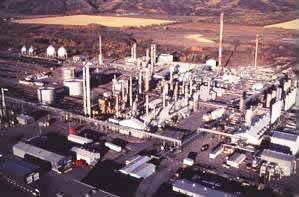
The 90th Carnival of Nuclear Energy Bloggers is up at Atomic Power Review. Once again, Will Davis leads off with a mystery picture: What is this? I always admire Atomic Power Review for its excellent graphics (among other things) but couldn't Davis make these mystery pix a little easier? On the other hand, I learn a lot by seeing the graphics and reading the explanations. Who on earth knew about....okay! I won't give it away!

In the Carnival as a whole, Brian Wang of Next Big Future describes China's revised plans for new reactors (only 40 or so!). Rod Adams of Atomic Insights describes the potential start-up of a nuclear-based investment fund, and Dan Yurman of Idaho Samizdat describes other investment decisions (with odd twists) in nuclear energy. Wes Deason at ANS Nuclear Cafe describes the role of plutonium in spacecraft, and Gail Marcus of Nuke Power Talk has a sense of Deja Vu about the effect of the turmoil in the Middle East about energy decisions. Steve Skutnik of Neutron Economy combats the lack of numerical reasoning among some renewables supporters (no number, however high, of wind turbines actually equals a nuclear plant's output). At Yes Vermont Yankee, I discuss the implications of the recent court decision for upcoming Public Service Board deliberations.

Wonderful posts, puzzling pictures, who could ask for anything more? Come to the Carnival! If nothing else, you can read it during the football breaks, between commercials. Great job, Will Davis!

Saturday, February 4, 2012

Gaz Metro: Who Owns the Vermont Infrastructure

The Merger

The two major electric utilities in Vermont have asked the Public Service Board for permission to merge. The two utilities are Green Mountain Power (GMP) a wholly-owned subsidiary of Gaz Metro of Quebec, and Central Vermont Public Service (CVPS). Public Service Board docket 7700 has been opened to consider this merger, and public comments are still accepted.

In the proposed merger, Gaz Metro (the company that owns GMP) would buy CVPS, putting both utilities under Canadian ownership.

This merger may not be good for Vermont. With this merger, 72 percent of Vermont’s electric utilities would be under Canadian ownership. The transmission line companies (TRANSCO and VELCO) that are jointly owned by the utilities would also be Canadian-controlled. Also, Gaz Metro owns Vermont Gas Systems (VGS) and VGS owns the only gas pipeline into Vermont. After the merger, one Canadian company would own most of Vermont’s electric utilities and all Vermont’s natural gas pipelines.

Problems with the Merger

Issues with the merger can be classified into three main categories:
  1. Foreign Ownership of so much of the energy infrastructure in Vermont.
  2. Consolidation of Ownership by one powerful company.
  3. Weak Regulatory Control by Vermont, including conflict-of-interest issues.
This blog post will discuss the first two issues. Later posts will consider other issues.

Foreign Ownership

It is not popular to make too much of the foreign ownership question, because it appears xenophobic to do so. Nevertheless, when countries export electricity or gas to other countries, they attempt to make a large part of their profits from the exports. The profits from the exports allow the country to sell energy (electricity or gas) more cheaply at home.

For example, according to the 2010 HydroQuebec annual report, HydroQuebec sold 7% of its electricity outside of Quebec, but made 17% of the company’s net income from those sales. According to Thierry Vandal, President of HydroQuebec (in the annual report):
…tight control over our energy market transactions and risks meant that every kilowatthour exported was highly profitable.

A graphic about profits heads this blog post: it is from the HydroQuebec annual report. You can click to enlarge it.

Gaz Metro Profits

Gaz Metro does not break out its profits sources so neatly, and a careful reading of its annual report shows its GMP and VGS investments to be less profitable compared to its Canadian sales. Still, Gas Metro profits from GMP and VGS increased 40% between 2008 and 2009. One factor in the increased profitability was an increase of $3.8 million in GMP’s share of TRANSCO’s earnings. Since total Gaz Metro profits (all divisions) were $160 million dollars, this increase is quite significant. A United States Federal tax credit of $40 million dollars for the Lowell Mountain wind farm project will also be highly significant to the Gaz Metro bottom line.

In other words, Vermont sales are becoming a growing and profitable business for Gaz Metro (To review the financial material more closely, go to the Management Discussion and Analysis section of the Gaz Metro Annual Report.)

Canadian Regulators and Vermont

Gaz Metro will make a profit by entering the Vermont market: that is to be expected. They would not begin business in Vermont if they did not expect to be profitable. Still, no matter how physically or emotionally close Vermont may be to Canada, we should be aware that Canadian regulators often require companies to supply Canadian customers with energy at lower prices than foreign customers. Gaz Metro is required to supply natural gas at cost to most of its Canadian customers.

If Canadian companies are a modest part of Vermont’s energy supply, Canadian regulatory constraints are not too much of an issue. If a single Canadian company owns most of Vermont’s electric distribution and all Vermont’s gas distribution, the requirements of Canadian regulators can have major impacts on Vermont’s customers.

Consolidation of Ownership

Consolidation of ownership issues tend to be the issues most discussed by commentators. So much of the infrastructure being owned by one company has been heavily discussed and challenged. In a recent article in Vermont Digger, Avram Patt, general manager of Washington Electric Cooperative, explained that whoever controls VELCO will make all of the major infrastructure decisions in the state. Because of this, municipal and cooperative utilities (including Washington Electric) have intervened before the PSB, hoping to protect their interests.

John McClaughry echoes this concern in an article in Vermont Tiger entitled Senator Illuzzi and the Utility Merger Case. Vermont State Senator Illuzzi has also intervened in the merger hearing. As McClaughry writes: Illuzzi argues, rightly in my opinion, that VELCO is the big prize here, because the Canadians want to ship a lot of hydro power south to the major US markets in New York and Boston. VELCO essentially owns the transmission corridor.

Illuzzi has also intervened about the merger at the federal level, at FERC. Once again, Illuzzi’s intervention rests on the fact that the combined utility will own the VELCO’s transmission corridor. In their application to merge, GMP and CVPS tried to address this concern by saying that some of the VELCO stock will be placed in a new trust fund, the “Vermont Low Income Trust for Electricity.”

Illuzzi’s intervention filing rejects this as a solution: Apart from a pro forma share transfer agreement that appears as part of Exhibit I to the Application and some vague assertions, the Applicants’ claims about the “VELCO Conveyance” do nothing to remedy the concern that this merger, between the two largest utilities in the State of Vermont, would give them effective control over the decision making of the State’s only owner of high voltage transmission facilities.

The Gas Pipeline

At the same time as the electric utility merger, Gaz Metro is planning to expand further into Vermont as a gas company. Right now, Gaz Metro only supplies gas to the Burlington area, but they hope to extend their pipeline to Rutland. Guy Page of VTEP reviewed the proposed Vermont Energy Plan: the plan supports Gaz Metro extending its pipeline south.

Once the Gaz Metro pipeline is built, natural-gas-fired plants can make electricity. As Page said on VPR: "Well, it (the plan) talks a lot about building natural gas plants in Vermont, medium sized natural gas plants."

Right now, there are no natural gas power plants in Vermont. However, after the utility merger and the pipeline extension, there may be many such plants. Gaz Metro may build the plants, GMP may build the plants, or other entities might build them. Gaz Metro will certainly own the pipeline, and profit by the existence of the new natural gas plants.

In other words, natural gas or electricity, Vermont’s energy supply and energy transmission will depend heavily on Gaz Metro. This would be a major consolidation of energy supply sources in one foreign company.

Vermont and Regulation

Vermont has regulated utilities. The Department of Public Service (DPS) is the consumers’ advocate when utilities come before the Public Service Board (PSB) in a docket about service and rates. After the merger, no matter how concentrated their holdings are in Vermont, Gaz Metro still must submit to the rulings of the PSB.

People in favor of the merger point this out, and say that the DPS and PSB will protect consumer interests. So far, this is not happening. In later posts, I will discuss recent DPS and PSB actions, and on-going issues about conflict of interest.

-------

This post originally appeared at True North Reports. I am grateful to Rob Roper for permission to repost it here.

Friday, February 3, 2012

Entergy Requests Legal Fees

A few minutes ago, I learned that Entergy had requested $4.6 million in legal fees from the state of Vermont.The state of Vermont knew this was coming. These are the legal fees for the Commerce Clause part of the lawsuit. In a front-page article by John Gregg in my local paper about a week ago, Attorney General Sorrell said it's also possible that the state of Vermont could be liable for Entergy's legal fees in arguing one part of the lawsuit that involved constitutional issues under the commerce clause, but that it was unclear whether Entergy would seek reimbursement.

In an article by Terri Hallenbeck of the Burlington Free Press earlier this week, she noted that Entergy had until the end of this week (that is, until today) to ask for reimbursement.

I figured Entergy would ask for reimbursement. As a business, if you can get reimbursement, you ask for it. That is especially true of public companies like Entergy. They could be sued by their stockholders for saying the equivalent of "Yeah, the State of Vermont owed us lots of money, but we thought we should be nicey-nicey and not collect." Why Sorrell even thought Entergy might not seek reimbursement is not clear to me. The state has lost other lawsuits, and the requests for reimbursements are still coming in, at the one and two million dollar level per party involved in the lawsuit, with no end in sight.

I can just imagine the number of newspaper articles that will come out of this, and the anger from people who oppose the plant. Well, those will be other stories, for other days.

That's the news for now!


Update: Rutland Herald article says judge's ruling includes that Vermont Yankee is owed legal fees. Here's a link to the ruling...I haven't looked for the "legal fees" statements yet.

Saturday AM Update. Excellent article in Vermont Digger about the fees. Sorrell is negotiating fees on other cases he has lost. Supreme Court has said that on Constitutional issues, legal fees are awarded to the winner, to be sure that all sorts of people can bring these cases.

Natural Gas Interests and the Sierra Club and Vermont

Natural Gas Interests

The Sierra Club has accepted $25 million in funding from natural gas companies. It is not clear to me that the Club has actually revealed all their fossil fuel funding. This story was broken yesterday by Time Magazine's Bryan Walsh.

This is fresh news. While there is still some news on the Vermont Yankee front, it is pretty repetitive stuff. As reported by Bob Audette in the Brattleboro Reformer, nuclear opponents attempt to maneuver the Public Service Board by saying the same old things. Their news will be on-going for a while. It's time to follow this Sierra Club news.

I Told You So?

Rod Adams of Atomic Insights kept blogging that nuclear opponents were probably in the pay of the natural gas industry. Many of us were leery of anything that looked like a "conspiracy theory." It looks now like Adams was right about some of the opponents. Here's a 2009 post from Rod Adams about Carl Pope of the Sierra Club extolling natural gas.

To find some more Adam's posts on the natural gas connection, search the Atomic Insights blog for posts labelled "smoking gun."

Local Natural Gas

I have never thought that all local opponents were funded by the natural gas industry. Also, I think natural gas has an important place in the energy future of the country, as I wrote at ANS Nuclear Cafe. But I don't like to see gas companies wrapping themselves in green to try to destroy nuclear power.

In 2010, I discovered that the Conservation Law Foundation, a fierce opponent of Vermont Yankee, received money to help build a new natural gas plant in New Hampshire. I wrote a post about the gas plant: Follow the Money. The Conservation Law Foundation didn't like some subsequent publicity they received after that post. Oh well. I'm not popular with them. Sometime during high school, I stopped trying to be popular with everyone!

Gaz Metro and Vermont

Meanwhile, in 2012, Gaz Metro, a Canadian gas company, is positioned to take over most of the energy infrastructure in Vermont. The new Comprehensive Energy Plan for Vermont talks a good game about an all-renewables future, but the near-term recommendations center on an expanded gas pipeline (built for Gaz Metro by increased rate-payer fees during construction, before any gas flows through the pipeline). Another part of the plan is to build small and medium-sized gas plants. For an overview, I suggest Howard Shaffer's excellent post: The Vermont Energy plan relies too much on fossil fuels.

One gas company funded the Sierra Club, and another one is taking over Vermont energy infrastructure. That doesn't mean that all nuclear opponents are funded by natural gas, but clearly, some of them are.

An Overview of the Gaz Metro Takeover Plans

The Sierra Club revelation was new to me, but I was aware of the Vermont issue with Gaz Metro. In recent months, I wrote a series of articles for True North Reports on the Gaz Metro takeover of Vermont infrastructure. I plan to update these articles and post them on this blog over the next week or so.

Meanwhile, you can read the original posts here:


-------------

Wednesday, February 1, 2012

Back to the Public Service Board: Next Steps for Vermont Yankee

The court ruled in favor of Entergy in the recent court case. In consequence, Entergy applied to the Public Service Board for a Certificate of Public Good for Vermont Yankee.

Judge Murtha's ruling in the case is over 100 pages long. At one level, however, it can be summarized as follows:

The State of Vermont tried to alter a contract unilaterally. That is not allowed. The contract still stands. Just as it says in the contract, the Public Service Board will decide on the Certificate of Public good. The Public Service Board cannot consider radiological safety in granting this certificate, because that is the responsibility of the NRC, not the states. Also, the Board can't insist on below-market electric rates for in-state utilities, because that is against the Interstate Commerce Clause of the Constitution.

The Memorandum of Understanding

The contract that determines how Vermont Yankee applies for the Certificate is the Memorandum of Understanding. This is the contract between Entergy, the state and utilities, signed in 2002 when Entergy bought Vermont Yankee. It requires Entergy to obtain a Certificate of Public Good from the Public Service Board (PSB).

However, the fact that Energy actually applied for this certificate will be will be much discussed. During the trial, Entergy claimed that the PSB's neutrality had been seriously affected by the legislature's actions from 2006 to 2011. When the ruling was issued, it was not clear whether Entergy would appeal: the ruling put Entergy in the position of needing a PSB certificate in order to keep the plant operating. So far, Entergy has not appealed the ruling. It now seems that they have put the plant's fate into the hands of the PSB.

Both Entergy and the State have until mid-February to appeal, so it is not clear what happens next. Entergy could conceivably appeal while also applying to the PSB. The State could appeal and also request that the PSB not act until the court case is resolved.

It is all up in the air. As usual.

A Brief Guide to What They Are Saying

For a fuller review of the matter, I recommend these two articles. They are very different, and it is enlightening to read them and compare them.

Dave Gram of Associated Press reports that Entergy asked the PSB for a ruling. However, much of the article consists of a lengthy interview with one of AP's favorite nuclear opponents, Ray Shadis. Shadis worries that the PSB hasn't reviewed nuclear safety factors since Fukushima. Apparently, Shadis ignored the part of the judge's ruling which said that the PSB cannot consider radiological safety considerations. Shadis' comments make up most of the article.

Terri Hallenbeck of Burlington Free Press (BFP) provides a more complete report. She quotes plant opponents. However, she also quotes the Entergy CEO as he wonders whether the state will appeal. In this article, I learned that Entergy has until the end of this week to request legal fee reimbursement from the state. I also learned that PSB guidelines for a certificate do not require that a power plant provide service to Vermont. A very interesting article.

In my opinion, these two articles are an amazing compare-and-contrast, between mediocre reporting (AP) and excellent reporting (BFP). The AP article depends on the usual statements of the usual opponents. The BFP article obtains both sides of the story and includes a timeline about reimbursement.

A Final Note as We Await the State's Decision on Whether to Appeal the Ruling

Will the state appeal? Cheryl Hanna of Vermont Law School describes the bigger picture of federal prerogatives and attempted state pre-emptions. Her short, well-written interview is mostly about food safety, but definitely worth reading. Once there are federal laws regulating a subject, the role of the state is circumscribed. In other words, it is very unlikely that Vermont Attorney General Sorrell could win this case by appealing.


Monday, January 30, 2012

PV Solar and Vermont: Not a Good FIt. Guest Post by Charles Kelly

PV Solar Energy and the State of Vermont: Not a Good Fit

It is interesting to witness all the hype about PV solar energy fields in Vermont, and how these fields will be a panacea for our future energy needs. Even if we put aside the vast land area that solar requires, there is real concern that our energy planners are over-selling Solar Photovoltaic. Excessive investment in solar will cause taxpayers to pay substantially more for their electricity to the detriment of their personal savings.

Over-reliance on solar is an ill-conceived strategy. Our state energy planners seem more concern with hitting the perceived hot buttons of green energy and the subsidies that come with it, than conducting a pragmatic and thorough study of how well PV solar energy fits in our state.


Cost and Efficiency

Here are a few facts about solar, backed up by creditable data:
  • Solar panels are not remotely competitive with Coal, Gas, or Nuclear with regards to efficiency, cost, and materials.
  • Because of cloud cover; solar radiation reaching Vermont is 40% less per year (8 MJ/m2) than that reaching Montana, at the same latitude, and 59% less than New Mexico. In other words, we pay the same for solar panels, but unlike other states we get less production per panel.

Solar Technologies and Critical Materials

There are two basic solar panel technologies: crystalline silicon and thin film.

Silicon panels are more efficient, but costs more. Silicon semiconductor manufacturing, particularly the cutting of silicon ingots, is an energy-intensive, CO2-producing process. Taking this into account, the total net energy generated during the life (~ 25 years ) of the panels is reduced by as much as 10%. In addition panel output degrades about 0.5% per year due to aging, a significant reduction over 25 years.

Thin film panels use exotic rare earth metals, such as cadmium telluride, gallium arsenide, and indium. Only two nations, China and Mexico, have significant deposits of these materials. So much for being energy independent with PV Solar. Even with these sources, there are not enough of these materials on the planet to satisfy world need. There are no proven substitutes. The 2011 U.S. Department of Energy report Critical Materials Strategy outlines the severity of material limitations not only for PV solar, but wind power as well.


Efficiency, Cost, and Materials: The Three Warning Signs

Efficiency, cost, and materials are three warning signs that should not be ignored by state energy planners,. Planning decisions made now will affect rate payers and taxpayers alike for the next quarter century and beyond. Why jump into a technology that is not suitable for the New England area? In time, household and business electric bills will be much higher due to rolling the expensive solar energy into rate schedules. At that point, it will become abundantly clear to the average Vermonter that we have been misled, whereas the top 1% of households that are part of tax-shelter LLCs will have enjoyed a lucrative 20-year joyride courtesy of Vermont's SPEED program.

About Charles Kelly:

Charles Kelly, BME and MME Villanova University, P.E. Pennsylvania and Vermont, Consulting Engineer to Lithium Battery Industry. Granted two U.S. patents for battery and composite material design. Senior Principal Design Engineer (Ret.) Enersys Advanced Systems. Project Engineer (Ret.) Raytheon Engineers & Constructors for PSC of NH Seabrook Nuclear Station. Supervising Test Engineer (Ret.) for power industry components, Schutte & Koerting Co. Philadelphia, PA.

-------------

Sunday, January 29, 2012

Nostalgia Time: Shumlin in Favor of Vermont Yankee in 1998

Shumlin and Vermont Yankee: The Old Days

In 1998, Peter Shumlin was President Pro Tem of the Vermont Senate, and Vermont Yankee was owned by a consortium of utilities. In 1998, Shumlin sent a letter in support of Vermont Yankee to Mike Empey, a Vermont Yankee supporter. Mike Empey just sent the letter to me and gave me permission to post it. Shumlin writes that he fought an effort to prematurely close Vermont Yankee, "I can assure you that as long as I am one of the people in charge of the leadership of the Vermont Senate, no such provision will become law under our watch. Vermont Yankee contributes tremendously to the economy in Windham County, not to mention our power needs." Yes. Shumlin wrote this and signed it.

Mr. Empey works at Vermont Yankee, but he is not any type of official spokesperson. This posting of a 14-year old letter is not an official Entergy statement. Seems to me that official Entergy statements are never this amusing....


You can double-click to enlarge the image.