Showing posts with label United Arab Emirates. Show all posts

Sunday, March 11, 2012

95th Carnival of Nuclear Bloggers: Fukushima, One Year Later

The 95th Carnival of Nuclear Energy Bloggers is up at Atomic Power Review. Its title is Fukushima, One Year Later.

Before discussing the Carnival, let me start by reminding people that I have an op-ed, Vermont Yankee is Not Fukushima, which ran in the Keene Sentinel yesterday. I don't want anyone to say I ignored the anniversary and "just ran the Carnival again."

The Carnival

Putting first things first, Davis puts most important link right up top: his web page of links to major Fukushima accident reports, from all over the world. Let me recommend the ANS Committee Report on Fukushima, issued last week. It's one of the best. The report is clear, readable, and very helpful to anyone trying to understand the Fukushima accident.

As usual, Davis also leads off the Carnival with a mystery picture from his files. "What is this?" I didn't guess this one, but I had a clue. I almost-guessed. Davis must be making the pictures easier!

Much of the Carnival is about Fukushima, of course.
  • Dr. Gail Marcus, who spent part of her career in Japan, has two posts: Fukushima, One Year and Post-Fukushima US activities. Both are worth reading, from the international and American perspectives.
  • At ANS Nuclear Cafe, Les Corrice supplies a scorecard, rating the various Japanese investigative commissions.
  • Also at ANS Nuclear Cafe, Rod Adams asks how we can fight the fear-uncertainty-and-doubt spreaders about Fukushima, and spread some facts.
  • At his own blog, Atomic Insights, Rod Adams, shreds the "least informed piece on Fukushima to date." My question: how did Adams pick the least-informed piece? There's so much competition for that title!
  • Meanwhile, at Idaho Samizdat, Dan Yurman writes that U.S. Nuclear Renaissance will be a marathon, not a sprint. The major reason: low natural gas prices. (If anyone doesn't realize that many climate change concerns are more political than practical, let's just look at the general "environmentalist" rejoicing that natural gas plant builds will outpace nuclear.)
  • As usual, I write about Vermont. Two of my posts about the Public Service Board are in the Carnival, and Davis describes one of them as a "good laugh but a sobering post." You'll laugh, you'll cry...
  • As Dan Yurman writes, natural gas may be outpacing nuclear in this country. That is not happening world-wide, though. Brian Wang at Next Big Future describes that the United Arab Emirates are expanding their nuclear build, and China is expected to join them soon.
  • Brian Wang also posts about the planned U.S. build of a Hyperion reactor at the DOE Savannah River site. This rarely makes the main stream media news, so it's great that we have Wang to write about it.

And with that cheerful news, we end this week's Carnival

Come to the Carnival. Read the nuclear news from knowledgeable people! A feast for the intellect. Because of Davis's graphics library, this week's carnival is also a feast for the eyes.

Photo of Fukushima tsunami waves from The Telegraph

Saturday, October 1, 2011

72nd Carnival of Nuclear Energy Bloggers at Yes Vermont Yankee: International Builds, Domestic Issues, and What Do You Do With the Wolves?

Yes Vermont Yankee is privileged to host the 72nd Carnival of Nuclear Energy Bloggers.

Let's start with some good news. There's nothing like looking at the international scene to cheer a person up!

The International Renaissance

Jeff Madison of Cool Hand Nuke describes the biggest nuclear power station in the world. In UAE reactors to break ground in December, Jeff features a Dan Yurman post about the build in the United Arab Emirates. Construction of four new 1,400 MW nuclear reactors worth $20 billion, supplied by South Korea, will begin at Braka as early as this December. The actual date will depend on regulatory approval. The first of the four new units will come online in 2017 followed by the others through 2020.

France has ordered new steam generators to extend the lives of the nuclear plants from 40 to 60 years. Meanwhile, the Fukushima plants near cold shutdown, with pressure vessel temperatures below the boiling point of water.

In another post, Wang notes that the Oskarshamn plant in Sweden has finally completed its 250 MW power uprate. It is the largest BWR in the world. In the same post, he updates us on one of the Chinese builds, scheduled to go on-line in 2014. The dome is now in place.

But what about Scotland? They backed out of the nuclear renaissance recently, didn't they? In Scots Drop Out of UK Nuclear New Build, Dan Yurman of Idaho Samizdat analyzes the numbers, not the rumors. Yurman notes that lot has been made of the fact that Scottish & Southern pulled out of the U.K. new build. After looking at the numbers, it becomes clear they were hardly even in it to begin with. Claims by green groups that their actions represent a setback for new reactors in the U.K. are not supported by the facts. The company plans to go back to their core business: natural gas plants fueled by the fields of the North Sea. Oh, yes, they will build wind turbines, too.

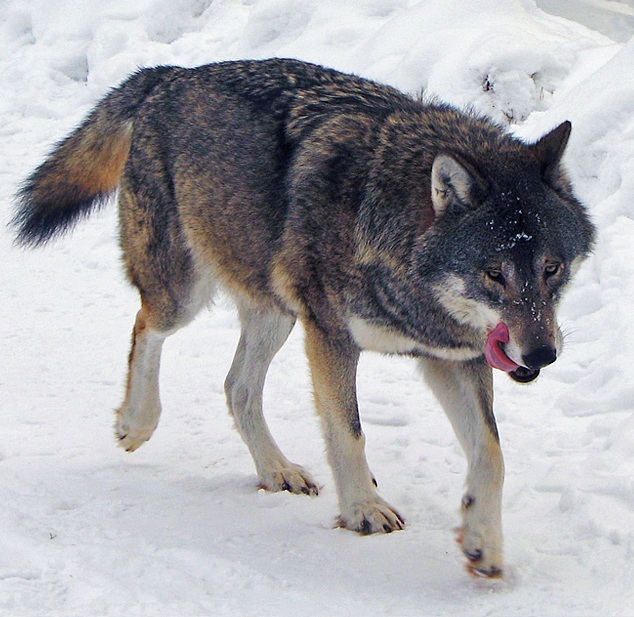
While we are looking internationally, we must tip our hat to Rod Adams, who doesn't shy away from the big issues. In Radioactive Wolves, Coming to PBS Nature on October 19, 2011, Rod looks at Ukraine and Belarus: Chernobyl. One of the persistent propaganda myths about using nuclear energy is that hypothetical accidents can release radioactive material that will render vast areas of land uninhabitable for centuries. It is a good thing for wolves, deer, and boars that they cannot read antinuclear propaganda or watch television.

If you want to understand a little more about the actual environmental conditions just 25 years after a catastrophic nuclear plant accident, tune in to PBS’s Nature program on October 19, 2011 and watch Radioactive Wolves.

(If you can't watch the program, at least watch the trailer for it on Rod's blog post.)

The Domestic Scene and the Government

Unfortunately, all the posts about the domestic scene are basically about the Government and Its Role in Nuclear Power. Well, we soldier on. At least our bloggers have good insights into the problems.

In Nuke Power Talk, Gail Marcus looks at Solyndra: What It May Mean for Nuclear Loan Guarantees. She considers the bankruptcy of Solyndra and contemplates the effects it could have on other industries. The nuclear power industry is also in the Federal government's loan guarantee program. This business failure will not cause renewable advocates or nuclear advocates to rethink their positions, but it may cause the government to decide that all loan guarantees are a bad idea.

In The Neutron Economy, Steve Skutnik posts the second part of his analysis of the Blue Ribbon Committee recommendations. Dissecting the BRC Report Part II: Where Interim Storage Falls Short. While the BRC provided useful guidelines for situating an inevitably necessary geologic repository, their technical recommendations for waste management fall short for a number of reasons. Their recommendations depend on interim storage, which may be useful at buying time for waste management policy. However, the BRC report's conclusions ultimately rely on a deus ex machina approach, waiting for as-yet nonexistent transformative technology to come and solve their problems for them.

At Yes Vermont Yankee, I report that Governor Shumlin does not give our nuclear plant even the most minimal level of credit for its service to society. In Taking the Petty Road: Governor Shumlin, Hurricane Irene, and Entergy's Charitable Donations, I note that Governor Shumlin gave the press a list of business "angel donors" who contributed large amounts to disaster relief after Hurricane Irene. He included several companies who gave far less than Entergy (Entergy gave $130,000). Shumlin left Entergy off the list.

Well, that's a downer.

So I'll include my blog post about the Energy Safari visit to Lempster Wind Farm, which has plenty of pictures, as well as some interesting information about wind.

The Future

For our look into the future, let's join Charles Barton of the Nuclear Green Revolution. Charles sees into the future because he understands the past: specifically, work done at Oak Ridge National Labs that was abandoned before it was truly completed. This time, Charles has a pair of posts about small reactors. His first post is about Underground Reactor Advantages:

Underground housing of small reactors appears to be practical and it is credible to argue that Underground reactor housing can lower nuclear costs, and dramatically shorten reactor construction times. In addition underground housing can increase nuclear safety and offer significant protection of reactors from aircraft and other forms of terrorist attacks.

But how do we get our reactors in place? Charles answers this question in Transporting Small Factory Built Reactors and Modular Components. Both highway and rail transport of reactor units and reactor modular components will create problems for reactor mobility. At the same time it appears possible to truck transport core units for MSRs of up to 100 MWe. The SM MSR modules could be locally delivered by barge or ship, and then moved to their final locations by truck or by rail. Thus the cost savings potential of factory manufacture of reactors is an open possibility.


Hope you enjoyed the Carnival! Next week, the Carnival will appear again--at Next Big Future. Stayed tuned!


Photo of Avignon carousel and Lempster wind farm are my own. Oskarshammn photo from Wikipedia. European Wolf from Wikipedia

Friday, May 14, 2010

Vermont and World Nuclear

In Vermont, it becomes very easy to think that the whole world is anti-nuclear energy. Except for the people in Vernon who work at the plant, of course. The anti-nukes make a lot of noise, some of it not very rational. Senator Shumlin asserts we have abundant solar resources in Vermont (making me wonder whether he lives here). The same old crowd in Brattleboro keeps making the same old shut-it-down statements. And so forth.

Today I will do a compare-and-contrast post. I am going to examine two places in which one would think that nuclear would be not-an-option. Instead, new nuclear plants are being built.

Finland

The Olkiluoto 3 reactor currently being built in Finland has become a poster-child for anti-nuke activists. The project has had major cost overruns of perhaps 1.5 billion Euros and is seriously behind schedule. (Similar reactors being built in China are within budget and on schedule.) The construction problems in Finland make the local crowd in Brattleboro extremely happy, as their worst economic assumptions seem to be proved true. Naturally, Vermont anti-nukes expect Finland will swear off nuclear forever.

Nothing could be further from the truth. As Dan Yurman (and others) report, the Finnish government is granting permits for two more reactors. Finland gets 1/3 of its electricity from nuclear now, and plans to increase that to more than half from nuclear. The Environmental Minister Anni Sinnemaeki objected that the new reactors would be “dangerous” because they are “based on foreign technology.” Okay. Whatever.

Perhaps the Finns are building nuclear plants because they are desperate. They have very few other energy choices. Their major non-nuclear option is buying gas from Russia; these purchases place Finland in energy fealty to their old enemy. Not even Shumlin would claim that Finland has abundant solar in the winter.

Perhaps poor old Finland has no choice.

So let's look at another country. Let's look at the United Arab Emirates.

United Arab Emirates

The United Arab Emirates (UAE) have a lot of oil. They have abundant solar year-round. Being near the equator, they can count on solar for many hours a day, even in winter. And they don't have a lot of clouds, either.

They are building four nuclear reactors. They plan to save their oil, use solar as appropriate, and build nuclear. It makes sense.

First of all, we are at peak oil, and oil will become more expensive in real terms as the century goes forward. Why should the people of the UAE burn their oil to make electricity? It is far better to sell it. The UAE have plans for solar, but even in a desert, people still need baseload. Also, they plan to use some of that nuclear power to desalinate water.

According to Wikipedia, the UAE population has grown from about 200,000 in 1968 to five and a half million today. Clearly, they need a new energy path for the future.

Thanks to Dan Yurman for the article about the reactors, and thanks to Rod Adams for this excellent video clip, straight from the Emirates. Watch the reasons for this decision in their own words. Unfortunately, not all the Arabic is translated.


If you have difficulty reading the subtitles, note that double-clicking on the video will open it in YouTube, in a bigger format.

Conclusion:

North or South, resource-poor or resource-rich, nuclear is an important option. An essential part of the energy mix.

The same is true in Vermont.