Showing posts with label Clean Energy Development Fund. Show all posts

Wednesday, October 19, 2016

Vermont Yankee Decomm Fund Supports Local Schools. Guy Page Guest Post

Pellet Boiler Schematic
Wikipedia
VY Decommissioning Fund Supports Local Schools

Next summer, money from the 2013 Vermont Yankee decommissioning settlement is scheduled to help pay for the oil-to-wood pellet furnace conversion of a Windham County school.

Flood Brook Elementary School in Londonderry will become the first full-sized public school to receive a new pellet-burning furnace with Windham Wood Heat Initiative (WWHI) assistance, a program overseen by the Windham Regional Commission, WRC planner Marion Major said in an October 7 interview.

WWHI was created with funding from the December 2013 Master Settlement Agreement (MSA) between Entergy and the State of Vermont that settled most of the parties’ disagreements and cleared the path for Vermont Yankee decommissioning. The MSA provides more than $40 million from Entergy for site restoration and renewable and economic development including $5.2 million for the Vermont Clean Energy Development Fund. This excerpt from an April, 2015 WWHI press release summarizes the program:

“The $1.6 million-program, funded by Vermont Yankee decommissioning via the Vermont Clean Energy Development Fund (CEDF), will help at least 20 municipal and school buildings convert to heating with advanced wood heating systems that use local, sustainable wood while addressing those buildings’ energy efficiency and durability needs. The program also includes public education, training for local building professionals, and fuel supply procurement.”

WWHI will pay 25% of a school’s pellet furnace installation cost and also offers planning assistance. After the oil furnace at the small Esteyville school building in Brattleboro failed in September 2015, WWHI enabled the conversion to pellet heat, thus cutting oil consumption by 1100 gallons per year, according to a March 30, 2016 report on i.brattleboro.com. WWHI also has financed control system upgrades to the Academy School in Brattleboro, Bellows Falls Middle School, and Leland & Gray in Townshend. Several others schools have tentative conversion agreements that are contingent on securing voter support. But there has not yet been an oil-to-pellet furnace conversion at a full-size, traditional public school – Flood Brook is scheduled to be the first.

The unexpectedly low cost of heating oil has been a challenge to the speedy acceptance of wood pellet conversion, Ms. Major said. The emergence of the hydro-fracturing mining process that has suppressed natural gas prices – to the detriment of the nuclear power industry – also has suppressed the price of heating oil. However, Major said many school officials remember when heating oil was very expensive and understand that fuel prices are subject to rapid change.

A recent snapshot of price comparisons, however, is hardly encouraging. The February 2016 Vermont Fuel Price Report, published by the Vermont Department of Public Service, shows fuel oil costing $16.85 compared to $22.41 for wood pellets. Until pellet fuel costs as much as or less than oil, school officials will be looking an expensive conversion that – for now – consumes a more expensive fuel, as well.

An October 5 wood boiler incident that forced the evacuation of a Lebanon, NH school is highly unlikely to occur in Vermont, Ms. Major said. According to the October 6 Valley News daily newspaper, stack emissions from the Lebanon Middle School wood pellet furnace were wind-blown into the school’s air intake system, causing smoke to circulate inside the building, the News said. The Vermont systems use standards designed to prevent such incidents, Ms. Major said.

------
Guy Page is communications director of the Vermont Energy Partnership (www.vtep.org).  Page is a frequent guest blogger at this blog: his most recent post is The Panama Canal and the Renewable Mandate.

Thursday, February 6, 2014

Gas Pipelines and Fees. Both are on their way.


Gas Pipeline Flange
From Wikipedia
The gravy train slows down

Vermont Yankee will close late this year, but the region still needs energy. Other plants are also closing, due to the low natural gas prices: Brayton Point, Salem Harbor and more.  As AP's Stephen Singer wrote: New England power plant closings pinching supply. As Susan Smallheer wrote in the Rutland Herald: New England electricity glut a thing of the past.  Meanwhile, as Jim Conca (and others) reported, the gas pipelines couldn't carry enough gas to New England during the cold weather, and energy costs soared.

But heavens!  Let's not talk about energy!  Let's talk about some real problems, such as the state's current problems funding the Clean Energy Development Fund (CEDF). By law,  Vermont Yankee was forced to contribute tens of millions of dollars to CEDF. But Vermont Yankee is going away. In a recent agreement with the state, Vermont Yankee agreed  to put a final five million dollar payment into CEDF. But that will be the end of the Vermont Yankee contributions.

Vermont Fights for the Clean Energy Fund

Losing Vermont Yankee means losing the Clean Energy Development Fund, unless something is done
Building a pipeline
From Wikipedia
about the situation. In Vermont, something will always be done if favorite government subsidies look like they might run out of money.  At least, that is my opinion.

Vermont will soon no longer have Vermont Yankee, but what do we have?  Well, we have gas pipelines, and we have schools. As a matter of fact, a new gas pipeline is being built in western Vermont, though many (but not all) local people oppose it.

So the latest proposal to raise money for the CEDF is a combination of taxing gas pipelines, and diverting some school tax money to the fund.  Vermont Digger reports on the most recent bill to raise money: Shift in Pipeline Taxes Proposed to  Fund Clean Energy Projects.

This Vermont Senate bill has various sections, including:

  • Diverting the part of the pipeline property taxes that now go to the education funds to the Clean Energy Development Fund. (The portion of the property tax that goes to town services would continue to go to the towns.)  
  • Writing the pipeline tax assessment so that it never can depreciate to zero, but only to 30% of the original installed cost. Therefore, the pipeline will always have a residual value that can be taxed. (Changing the depreciation rules could raise the price of gas, though proponents of the plan dismiss that idea. Their argument seems to be that many things affect the price of gas. So what's one little tax more or less?)

Regulated utilities are different from you and me

Regulated utilities are different from you and me.  Regulated utilities always make money. (The few exceptions to this rule generally make the headlines in the newspapers.)

Vermont Gas Systems, a division of Gaz Metro, is a regulated utility.  From the state's point of view,  taxing Gaz Metro's gas pipelines has many advantages over taxing Entergy's Vermont Yankee.  Vermont Yankee had to pay its taxes from the money it could generate as a merchant plant.  Vermont Yankee could not raise its prices just because its tax burden had risen.  So if the taxes rise too high, the plant would lose money and go out of business.

Not so with a regulated gas pipeline. They can raise quite a bit of money.  If taxes or depreciation rules increase the cost of running the pipeline, or if the price of natural gas itself goes up, the regulated utility does not suffer.  It does not go out of business.  It just asks the Public Service Board for a ruling to increase the rate that it charges to customers.  When the utility shows a cost increase to the Board,  a rate-increase ruling is practically guaranteed.

This makes taxing a gas pipeline a very good choice for raising revenues for the state. It helps the Clean Energy Fund, it doesn't hurt Gaz Metro, so it's a good thing all around.

Well, it's a good thing most of the way around, perhaps. Pass-through taxes might hurt the Vermont citizens who have to pay those increased rates.  That might be something to think about.

Anybody thinking?

-------

There are other pipeline taxes under consideration, but those will be a subject of another blog post.

Sunday, June 23, 2013

National Climate Strategy: It's about the money. My prediction

Last night, two friends sent me the same link to President Obama's announcement: he announced that he will announce his climate strategy on Tuesday.

Here's the Washington Post link: Obama to announce Tuesday he will regulate existing power plants as part of climate strategy

Here's the video of the pre-announcement.


One of my friends is pro-nuclear and she wrote something like:
"OMG, this is great news for nuclear energy!"

The other friend is a libertarian, and she wrote something like:
"OMG, what new area for regulation is coming next?"

Of course, I answered with some predictions, which I will also share right here, on my blog.

My Predictions

 IMHO, the climate change initiative will be a fundamentally a tax-raising scheme.

The scheme may include something like Vermont has now:  Entergy must contribute to a Clean Energy Development Fund (though its own energy is clean, of course).  The government will steer that shiny clean money to the people and projects that they think should receive it. In Vermont, the money goes to renewable projects and efficiency.

But I suspect that most of the money collected at the federal level will go to directly to the government.  The national government is desperate for new sources of revenue.

What about emissions? At most, this  carbon tax could tilt the balance  from coal to natural gas.  However, unless the tax is so high that it would have a visible effect on electricity prices (and no politician wants that), the main driver will continue to be the relative prices of gas and coal.  In other words, this scheme won't affect carbon emissions very much, but it will raise revenue.

The utilities have their plants in place. Unlike other industries, utilities can't move out of the country. So--voila! The sitting ducks!

Tuesday, February 28, 2012

The Mountains of Vermont Yankee: The Issues Behind the Issues

This morning, I have a blog post at ANS Nuclear Cafe: The Mountains of Vermont Yankee.

In this post, I show how every issue about Vermont Yankee has another issue hidden behind it. There's Vermont Yankee and the Constitution, and behind that there's Vermont and other constitutional challenges, and behind that there's the business climate in Vermont, and behind that there's Vermont Yankee as cash cow and behind that...well, you get the picture!

Writing about Vermont Yankee is like facing a mountain range. There's always another issue behind this issue, another hill behind this hill! Hopefully, my post puts some Vermont Yankee controversies in perspective.


-----
Ahem. Before everyone emails me with corrections.
  • I am aware that Vermont Yankee is in a comparatively flat section of Vermont.
  • I am also aware that the iconic Vermont mountain pictured here (Camel's Hump) is in the northwest part of Vermont, while Vermont Yankee is in the southeast corner of the state.

Tuesday, March 8, 2011

Guest Blog by Willem Post: Subsidies for Wind and Solar

Guest blog by Willem Post

Today's Valley News (my local paper) contained a front-page article: Is the Home Solar Market Dimming? The article was by Chris Fleisher, an excellent business writer, and included a picture of Kimberly Quirk, a local engineer who owns the Energy Emporium in Enfield, New Hampshire. I have known Kim for several years, and have the greatest admiration for her knowledge and her store.

The article had a picture of Ms. Quirk in her super-insulated basement, but very little else about conservation. Willem Post wrote this guest post in response to the Valley News article.

----------

The March 6th, 2011, Sunday Valley News article Is Home Solar Market Dimming? describes that the future of PV solar looked bright until about 2008. Then the Great Recession began to bite. Many households in the top 5% of income, who had been benefiting the most from the generous PV solar subsidies, decided to be less green as there was less of the green stuff in their financial accounts.

Vermont had a substantial amount of funds in the Clean Energy Development Fund (CEDF) but it was decided to rapidly spend most of it (lest legislators would raid that kitty for other "worthwhile" state programs) on subsidies of up to $250,000 per project for wind turbine and PV solar systems. The politically well-connected received most of the subsidies for commercial projects (groSolar recently sold its residential division), leaving not enough for no-political-clout households.

The CEDF has about $800,000 left. Vermont Yankee had been required to kick in about $6 million per year since about 2002, but with the prospect of that plant closing that source of funds will disappear.

A CEDF Funded Project

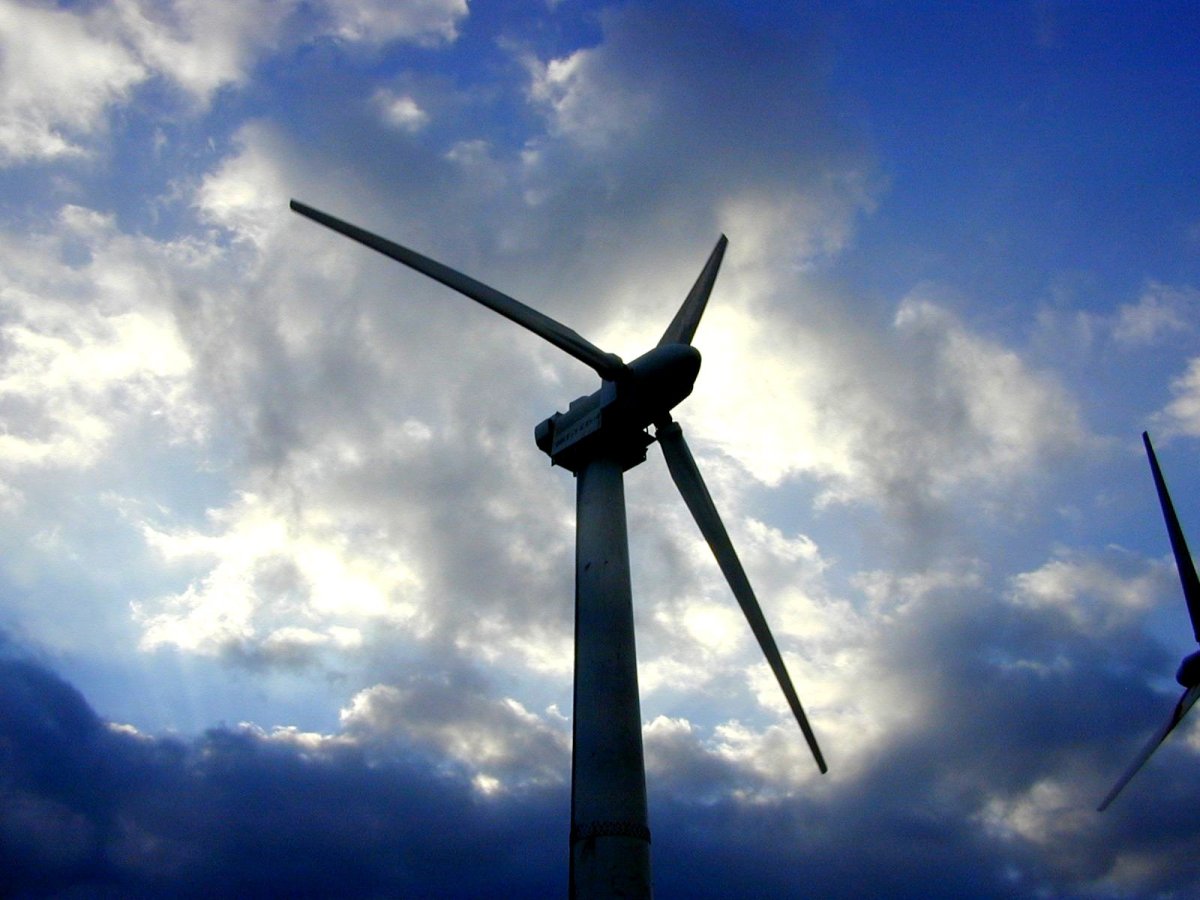
For example, the CEDF provided a $250,000 subsidy to the Bolton Valley Ski Area so it could install a 100 kW, Vermont-made, wind turbine for $750,000; it has not been not operating for at least a week, even though there was plenty of wind.

According to Bolton Valley's website, the wind turbine generated 204,296 kWh from October 2009 to-date, about 17 months. Capacity factor is (204,296 kWh/1.4 years)/(8,760 hr/yr x 100 kW) = 0.17.

The web site has extensive information on the turbine. The wind turbine was sold to Bolton Valley on the basis it would produce 300,000 kWh/yr, for a capacity factor of 300,000 kWh/yr/(8,760 hr/yr x 100 kW) = 0.34. It is somewhat like selling a car and telling the new owner it will do 34 mpg, whereas it actually does only 17 mpg.

Icicles and the Use of Taxpayer Money

It is a travesty to waste scarce taxpayer money on projects of dubious value considering the many low-income households "living, i.e., freezing their toes off", in leaky, drafty, under-insulated single and doublewide housing all over the Vermont.

There are icicles hanging off almost ALL roofs in Vermont. The icicles mean that heat rises through the openings in the ceiling of the house, moves through the poor insulation into the attic, warms the roof, melts the snow to water which runs down to the colder eaves where it refreezes and forms an ice dam. Then the water backs up, forms a puddle, goes under the shingles and into one's living space.

How about a 30% subsidy for insulating houses, instead of the comparatively measly PACE program where households that borrow money to install energy systems have to pay back the loans with interest? (Note: Vermont's PACE program is described in the Valley News article. PACE stands for Property Assessed Clean Energy, and is a way for homeowners to borrow for energy improvements.)

Keeping the Subsidies Predictable

The end of the current funding from the CEDF was discussed extensively in the Valley News article. The concern was that on-again, off-again subsidies would not encourage the renewable industry. Rep. Margaret Cheney is a member of the House Natural Resources and Energy Committee. What are Cheney and her cohorts cooking up to bring subsidy predictability back?

The Committee is considering flat fee of 55 cents per month for households and a higher fee for businesses. These fees will be added to the electric bill. Note the fee for businesses is not specified. Will it be on kWh consumption? Will funds raised from households be allocated to households and funds raised from businesses be allocated to business? The idea is to start the fee low and jack it up later, as was done with the Efficiency Vermont fee (a quasi-state agency reporting to the Public Service Board. The head count at Efficiency Vermont is well over 175) which started at about 2% and is now about 5% of monthly electric bills, or $60/yr.

Energy Independence?

The Valley News story ends with this quote from Rep. Cheney:

“We need to become independent from out-of-state energy sources,” she said.

Cheney looks forward to the day Vermont becomes independent from out-of-state energy sources, such as Hydro Quebec which supplies about 30% of Vermont's power. However, many in the legislature look forward to closing Vermont Yankee which supplies about 35% of Vermont's power; both reliably provide low-cost, CO2-free, 24/7/365, steady power. Cheney has not taken a position on Vermont Yankee. Last year, around the time of the vote, she said that she would prefer to vote after tritium investigations ran their course. She said, however, that if she were to vote right at that moment, she would vote against relicensing the plant. (The House did not vote last year on Vermont Yankee. Only the Vermont Senate voted.)

Efficiency

I think Cheney should forward to the day Vermont is really serious about energy efficiency.

Energy efficiency will have a much bigger role in the near future, as energy system analysts come to realize that tens of trillions of dollars will be required to reduce CO2 from all sources and that energy efficiency will reduce CO2 at a lesser cost and more effectively.

Energy efficiency projects
  • will make the US more competitive, increase exports and reduce the trade balance.
  • usually have simple payback periods of 6 months to 5 years.
  • reduce the need for expensive and highly visible transmission and distribution systems.
  • reduce two to five times the energy consumption and greenhouse gas emissions and create two to three times more jobs than renewables per dollar invested; no studies, research, demonstration and pilot plants will be required.
  • have minimal or no pollution, are invisible and quiet, something people really like.
  • are by far the cleanest energy development anyone can engage in; they often are quick, cheap and easy.
  • have a capacity factor = 1.0 and are available 24/7/365.
  • use materials, such as for taping, sealing, caulking, insulation, windows, doors, refrigerators, water heaters, furnaces, fans, air conditioners, etc., that are almost entirely made in the US. They represent about 30% of a project cost, the rest is mostly labor. About 70% of the materials cost of expensive renewables, such as PV solar, is imported (panels from China, inverters from Germany), the rest of the materials cost is miscellaneous electrical items and brackets.
  • will quickly reduce CO2 at the lowest cost per dollar invested AND make the economy more efficient in many areas which will raise living standards, or prevent them from falling further.
  • if done before renewables, ENERGY EFFICIENCY will reduce the future capacities and capital costs of renewables.
I look forward to the day when Vermont is serious about Energy Efficiency.

German PassivHaus thermogram (house on right, with low thermal leakage) from Wikimedia.