Cheerful Nuclear Video for Friday
This is a nice little pro-nuclear video, which ends with a push for the development of molten salt thorium reactors. One of the nice things about this video is the comparison between quantities of nuclear waste (tiny amounts) and solar panel waste (huge amounts). Both of these waste streams contain toxic materials.
Showing posts with label LFTR. Show all posts
Showing posts with label LFTR. Show all posts
Friday, October 10, 2014


Thursday, August 8, 2013
Vermont Is Part of the World: Guest Post by N Nadir
 |
| Reading Prong, in dark pink, from Wikipedia |
The Prisoner's Dilemma
My American Nuclear Society blog post The Prisoner's Dilemma and New Types of Nuclear Energy Reactors was also posted at The Energy Collective. In these posts I compared the game theory example of "prisoner's dilemma" to the internecine fighting within the nuclear community. I concluded that proponents of all types of reactors should communicate with each other. This would advance the good of nuclear energy as a whole.
Within my post, I said that I had no trouble in supporting Vermont Yankee and also supporting the development of new types of reactors, especially the LFTR.
The post immediately received a lengthy comment from a nuclear opponent, who objected very strongly to anyone supporting Vermont Yankee. This man wrote that the people of Vermont don't want Vermont Yankee, they voted against Vermont Yankee, etc. etc. and so forth.
Blogger N Nadir replied to this comment about Vermont. N Nadir has graciously allowed me to use his answer as a guest post.
------------------------------
Guest Post by N Nadir
The people of South Carolina all once wanted slavery too; that didn't make it right.
Unfortunately, the decision of the people of Vermont to abandon climate change gas free energy does not effect only the people of Vermont, irrespective of their contempt for scientists. It effects everyone on earth.
The great climate scientist Jim Hansen has calculated that nuclear power has saved the lives of more than 1.8 million people.
http://pubs.acs.org/doi/abs/10.1021/es3051197
As it happens, much of the fracking that will be required to replace Vermont Yankee will take place on the Marcellus shale formation, overlying the Reading Prong. This is a uranium formation in equilibrium with radon gas. Unless the uranium is removed and fissioned it will leak radon for hundreds of millions of years, just so the citizens of Vermont, their pitchforks in hand, can avoid the paraoxyms of fear they had over a few atoms of tritium that, like the rest of the nuclear industry which has saved so many lives, has had no health effect.
One would find it amusing to compare the number of deaths from the use of nuclear power in Vermont with the number of deaths associated with the PAH's and PM10 particulates from burning wood in Vermont.
How many people have died because of Vermont Yankee?
There are some people who have some, um, concerns about so called "renewable" wood boilers in Vermont and they've written a rather long report about some of the issues: http://www.4cleanair.org/OWB-NESCAUM-Report_March2006.pdf
Has so called "renewable" energy in Vermont been more safe or less safe than the Vermont Yankee nuclear plant that everyone loves to hate, despite the lives it's saved?
The World Health Organization, in fact, reports that about 2 million people die on this planet each year - half under the age of five - from biomass burning: http://www.who.int/mediacentre/factsheets/fs313/en/index.html
For the entire 60 year history of nuclear power practiced all around the world, the loss of life from nuclear energy will not even remotely approach the loss of life from the burning of wood in New England next winter.
There are wrist watches that have more tritium in them than 20 tons of water around Vermont Yankee, not that this reality has prevented anyone from issuing hysterical demands that this life saving reactor be shut:
http://www.bluetritium.com/servlet/StoreFront
One would hope that no anti-nukes have tritium watch dials in Vermont, just as one hopes that they will be as upset with the millions of tons of carbon dioxide that they will soon be dumping out of fear of a few tritium atoms.
The planetary atmosphere is collapsing at the fastest rate ever observed. When we hear things like how Vermonters hate their nuclear plant, one must admit that we deserve what we are going to get.
Vermont cannot stop the diffusion of its atmosphere outside its borders.
When an element in Vermont destroys, out of ignorance and fear, clean infrastructure, they are not doing so in isolation from the rest of humanity. This is not a Vermont issue; it is a human issue.
....any man's death diminishes me, because I am involved in mankind. -John Donne
----------
N Nadir is a well-known blogger about energy: for a long time, he blogged at Daily Kos. A few years ago, Charles Barton of Nuclear Green described and listed many of his posts.
Wednesday, July 24, 2013
Prisoners Dilemma at ANS Nuclear Cafe

In this post I consider the question: Can nuclear advocates be simultaneously in favor of both
- existing reactors and
- developing advanced reactors?
I think we can be publicly in favor of both. However, sometimes we act like the two prisoners in Prisoners Dilemma who attack each other. This ends up with a bad deal for both prisoners (or both types of reactors).
I hope you will read my blog post and comment on it!
Tuesday, July 23, 2013
Nuclear Power for the Anti-Nuclear Set: Guest Post by John McClaughry
 |
| John McClaughry at a recent dinner in his honor |
Nuclear Power for the Anti-Nuclear Set
A Guest Post by John McClaughry
For decades, the various New England anti-nuclear groups have waged incessant warfare against the Vermont Yankee nuclear plant and Entergy, which bought the plant from a coalition of Vermont utilities in 2002. The outcome of that struggle now lies in the Federal court system, where Entergy has already won one signal victory.
It’s important to keep in mind that, leaving the particulars of the Vermont Yankee battle aside, the anti-nukies are fundamentally opposed to nuclear energy in any form whatever. Only old timers now remember that the Sierra Club was once pro-nuclear, which it viewed as the saving technology that would make the damming of California mountain streams unnecessary.
Interestingly, the Sierra Club, at least, does not totally slam the door on nuclear even today. In its 2006 energy policy statement it said “while it is possible that a different approach to nuclear power might substantially address these issues, the likelihood is remote given the decades of research and investment already made.”
What different approach to nuclear power might conceivably avoid the environmental issues that caused the Sierra Club’s opposition? To answer that question it’s necessary to review the origins and development of nuclear power, dating back to the 1950s.
That story is ably told in a book published in 2011 by Richard Martin, entitled Super Fuel. Martin
 |
| LFTR Image from Energy From Thorium blog http://energyfromthorium.com/lftradsrisks.html |
Rickover, a savage bureaucratic infighter, got what he wanted, and in 1972 Weinberg was fired. The nuclear industry put its muscle behind the hugely expensive liquid metal fast breeder reactor. It in turn was shelved in 1984 after Congress spent $8 billion on the Clinch River Breeder without turning a shovelful of dirt.
As Martin puts it, "Light water reactors and their younger cousin, the liquid metal breeder, won out because of technological intransigence rooted in the military origins of the U.S. nuclear program."
From 1965 to 1969, however, Weinberg's molten salt reactor experiment had operated successfully, in the later months with thorium-derived U-233 fuel. By 1973, with Weinberg gone, molten salt was rejected, and thorium was dead. Rickover's uranium-based industrial empire was preserved. any cheaper, safer and environment-friendly alternative was shelved.
Now, forty years later, the liquid fluoride thorium reactor (LFTR) is again emerging as one of the six “Generation Four” nuclear power technologies now viewed as most promising alternatives to traditional light water reactors.
Without going too far into technical details, the LFTR would almost certainly produce electricity cheaper than coal, because of lower capital and fuel costs; use a fuel that is in almost inexhaustible supply, both in the U.S. and elsewhere; operate continuously, in baseload or peaking mode, for up to 30 years; be factory-built and deployed in compact 100-megawatt modules close to the end use of the power; contribute nothing to air or water pollution and need no water for operation; safely consume long-lived transuranic waste products from current nuclear fission reactors; produce high-temperature process heat that can make hydrogen fuel for vehicles; and be walkaway safe.
This is not pie in the sky. The physics is sound, and every part of the LFTR has been successfully tested. What has not been accomplished is the efficient integration of all of the technology features into a marketable product.
The reason it has not is the determined opposition of companies that offer competing nuclear technologies: either light water reactors like the current improved version of Vermont Yankee, the AP-1000, or liquid metal fast reactors like the Russian BR-600, or exotic helium cooled pebble bed reactors under development in China.
Most of the present anti-nuclear groups are so mindlessly opposed to anything nuclear that they’ll probably denounce the LFTR if and when it appears. Still, more rational anti-nuclear groups like the Sierra Club, which is terrified at the menace of global warming, could possibly find in the LFTR the “different approach” that would win their support (and put coal out of business.)
---------
John McClaughry, formerly a nuclear reactor physicist, is vice president of the Ethan Allen Institute (www.ethanallen.org).
Meredith Angwin is director of the Energy Education Project which is part of the Ethan Allen Institute.
Note from Meredith: When speaking about the LFTR, I always want to be sure people are aware of Dr. Robert Hargraves excellent book: Thorium, Energy Cheaper Than Coal.
Sunday, May 12, 2013
LFTRs, a Disruptive Technology; Guest Post by Fred Moreno
This is a letter written to me and Robert Hargraves, which I obtained permission to share on my blog. I have edited it a little:
 Dear Robert:
Thanks for your book Thorium Energy Cheaper than Coal which I have just completed. Besides providing a further education on the topic, in reading the first page reviews, I saw one by Meredith Angwin which caused a distant memory to light up... I found her email address and we have struck up a conversation of shared interests.
I was motivated to write after reading your appendix with the paper that again retraces the history of LWRs and the evolution of the latest generation systems from Westinghouse et al. Their investment causes them to have little interest in any new technology that may detract from their established history and embedded corporate strategic heading. As you know, this is common in companies/industries that grow long in tooth.
Disruptive Technologies
If you are not aware of the work of Clayton Christensen at the Harvard Business School, you should review his work on "disruptive innovation" in light of the Westinghouse strategy and disruptive characteristics created by LFTR. In short, Christensen showed through research that markets change need, and differing needs cause changes in buyer preference which old suppliers can not adjust to meet. So they die. He started with disk drives, and broadened his research.
Some examples:
In disk drives, for years the driver was lower cost per megabyte which meant huge disk drives. I am
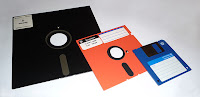 sure you remember the refrigerator size drives, lined up in rows, that serviced IBM 360's at computer centers to which we brought stacks of punch cards. Mini-computers (DEC VAX being most notable example) could be put in a closet so that small hard disk drives were preferred despite much higher $/MB cost. Small size was more important. The 8 inch Winchester and then 5 inch Winchester drives emerged, and a whole new industry of disk drive companies thrived. Interestingly, IBM did not make the transition, and the 8 inch guys could not transition to 5 inch who could not transition to 3 inch shock hardened units for lap tops. Once established, the established players could not match the cost structure and demands of the next smaller step.
 Research showed this happened in the past again and again. American clipper ships were unsurpassed in ability to sail around the Horn at low cost with high reliability. Steam ships were unreliable, expensive, and exploded. But clipper ships could not navigate rivers and canals, and it was on the Mississippi River and elsewhere that steamships found a solid footing and matured to eventually take over. Number of clipper ship companies that made the transition: zero.
Earthmoving was dominated by huge steam shovels. Figure of merit: dollars per cubic yard of soil moved. Bigger was better. Until the post WWII housing boom when somebody cobbled together a small hydraulic powered scoop that fitted on the back of a Ford rubber tire ag tractor and was driven by the agricultural power take off coupling. It was a kludge, but for cutting trenches around tract houses, it beat hand work by miles. Time goes on, and hydraulic backhoes have become huge and dominant in earth moving. Survivors from the steam shovel days: a couple that now make huge drag lines for open pit mining.
Bigger seems better, until it isn't
You see the pattern is clear in the context of LFTR: The proposed GEN III huge "modular" LWRs are derelicts of the past. They must be bypassed because the market demands something with different requirements - mass production, easily shipped and quickly erected at smaller, easier to find sites, economy from production line manufacture instead of economies of scale, and all the other benefits you know so well.
So as you pursue your quest for LFTR, and given your bully pulpit, I suggest you incorporate the lessons of "disruptive innovation" to show that costs, risks, performance, and other benefits arise from adaptation to the changes in market demand. "Disruptive innovation" needs to be a primary strategic element of LFTR commercialization attracting a new generation of business entrepreneurs not bound to the views of the past. It is a message that rings strongly with the venture capital set, all of whom have carefully read Christensen's work. It needs to be part of the LFTR equation.
Sincerely,
Fred Moreno, a retired Yankee Techie now resident on the SW coastline of Western Australia
----------
I worked with the author, Fred Moreno, at Acurex in the 70s. Moreno has a BSME from University of California and an MSME from Stanford University. He retired from his position as Chief Operating Officer and Executive Vice President of Silicon Valley technology company. The company made robotic systems for use in the semiconductor manufacturing business. Moreno now lives in Australia.

Thanks for your book Thorium Energy Cheaper than Coal which I have just completed. Besides providing a further education on the topic, in reading the first page reviews, I saw one by Meredith Angwin which caused a distant memory to light up... I found her email address and we have struck up a conversation of shared interests.
I was motivated to write after reading your appendix with the paper that again retraces the history of LWRs and the evolution of the latest generation systems from Westinghouse et al. Their investment causes them to have little interest in any new technology that may detract from their established history and embedded corporate strategic heading. As you know, this is common in companies/industries that grow long in tooth.
Disruptive Technologies
If you are not aware of the work of Clayton Christensen at the Harvard Business School, you should review his work on "disruptive innovation" in light of the Westinghouse strategy and disruptive characteristics created by LFTR. In short, Christensen showed through research that markets change need, and differing needs cause changes in buyer preference which old suppliers can not adjust to meet. So they die. He started with disk drives, and broadened his research.
Some examples:
In disk drives, for years the driver was lower cost per megabyte which meant huge disk drives. I am


Earthmoving was dominated by huge steam shovels. Figure of merit: dollars per cubic yard of soil moved. Bigger was better. Until the post WWII housing boom when somebody cobbled together a small hydraulic powered scoop that fitted on the back of a Ford rubber tire ag tractor and was driven by the agricultural power take off coupling. It was a kludge, but for cutting trenches around tract houses, it beat hand work by miles. Time goes on, and hydraulic backhoes have become huge and dominant in earth moving. Survivors from the steam shovel days: a couple that now make huge drag lines for open pit mining.
 |
| Avant Loader in Sweden |
Bigger seems better, until it isn't
You see the pattern is clear in the context of LFTR: The proposed GEN III huge "modular" LWRs are derelicts of the past. They must be bypassed because the market demands something with different requirements - mass production, easily shipped and quickly erected at smaller, easier to find sites, economy from production line manufacture instead of economies of scale, and all the other benefits you know so well.
So as you pursue your quest for LFTR, and given your bully pulpit, I suggest you incorporate the lessons of "disruptive innovation" to show that costs, risks, performance, and other benefits arise from adaptation to the changes in market demand. "Disruptive innovation" needs to be a primary strategic element of LFTR commercialization attracting a new generation of business entrepreneurs not bound to the views of the past. It is a message that rings strongly with the venture capital set, all of whom have carefully read Christensen's work. It needs to be part of the LFTR equation.
Sincerely,
Fred Moreno, a retired Yankee Techie now resident on the SW coastline of Western Australia
----------
I worked with the author, Fred Moreno, at Acurex in the 70s. Moreno has a BSME from University of California and an MSME from Stanford University. He retired from his position as Chief Operating Officer and Executive Vice President of Silicon Valley technology company. The company made robotic systems for use in the semiconductor manufacturing business. Moreno now lives in Australia.
Thursday, November 22, 2012
Thanksgiving Cheerfulness: Hargraves on LFTRs plus DOE Awards Cofunding for SMR
For Thanksgiving, I want to share two cheerful looks into the future of nuclear energy.
First, Robert Hargraves presentation: Thorium, Energy Cheaper Than Coal, on November 9 at the Jones Seminar on Science and Technology at Dartmouth College Here's a link to his book, too.
Second, a link to the Business Wire announcement that Babcock and Wilcox has been awarded Department of Energy cofunding for the mPower SMR (Small Modular Reactors). Small, affordable, and with lots of passive safety features. This may be the reactor of the future.
Have a good Thanksgiving!
First, Robert Hargraves presentation: Thorium, Energy Cheaper Than Coal, on November 9 at the Jones Seminar on Science and Technology at Dartmouth College Here's a link to his book, too.
Second, a link to the Business Wire announcement that Babcock and Wilcox has been awarded Department of Energy cofunding for the mPower SMR (Small Modular Reactors). Small, affordable, and with lots of passive safety features. This may be the reactor of the future.
Have a good Thanksgiving!
Wednesday, October 24, 2012
Robert Hargraves Presentations on Thorium Power
Save the date and time.
Tomorrow, Thursday October 25 at at 11 a.m, Dr. Robert Hargraves will discuss his book Thorium, Energy Cheaper than Coal, on WDEV radio in Vermont. It will be streaming on the Internet.
Hargraves will be on Rob Roper's show, which is co-sponsored by the Ethan Allen Institute. The Ethan Allen Institute is the home of the Energy Education Project: I'm the director of that project.
Thorium, Energy Cheaper than Coal is a very important book. I reviewed it very favorably on this site. I also recommend Hargraves own site about the book, which includes endorsements from winners of the Nobel Prize in physics.
Hargraves will be on the radio for the entire hour, from 11 to 12, and you can listen from your computer by clicking either flash or no-flash at the bottom left on the WDEV website. You can also call in to ask questions: the number is 802.244.1777.
Learn about the Liquid Fluoride Thorium Reactor (LFTR). Ask questions of Hargraves. Try to catch this show!
 |
| Dr. Robert Hargraves |
Engineering Seminar November 9
On November 9, 3:30 p.m., Hargraves will give an engineering seminar at Dartmouth on Thorium, Energy Cheaper than Coal. Obviously, you can't come to the seminar unless you live near Dartmouth. However, Dartmouth will post a video of the talk later in the month. When they do, I will link to it. If you live within striking distance, try to attend this seminar. I'll be there.
In Between: China
From October 29 through November 1, Hargraves will be at the Thorium Energy Conference in Shanghai, giving a talk on Thorium, Energy Cheaper than Coal. Both China and India are ahead of the United States on advanced fuel cycle reactors like the LFTR. But that's another blog post for another day! Meanwhile, if you don't want to travel to China, consider listening to the Rob Roper show tomorrow or stopping by Dartmouth's School of Engineering about two weeks from now.
Monday, September 3, 2012
Nuclear Energy Blog Carnival 120 At Hiroshima Syndrome Blog

Gail Marcus discusses Riot versus Reason (or you might say, mob rule versus orderly decision-making). Will Davis of Atomic Power Review interviews Matt Miles of Babcock & Wilcox about mPower,
Rod Adams of Atomic Insights describes the probably future of natural gas prices (sky-rocketing prices) and Steve Skutnik of Neutron Economy has a post arguing that Adams' post is wishful thinking about natural gas pricing. And there's more, much more!
Rick Maltese of ThoriumMSR and I post about the LFTR thorium reactor. Maltese wants to know why leaders aren't showing, you know, leadership about thorium. (That is a good question.) I review the recent book by Robert Hargraves: THORIUM: energy cheaper than coal.
Brian Wang at Next Big Future describes improved nuclear fuel, and Margaret Harding of 4factor consulting writes an open letter to the Wall Street Journal. Will Davis described the Dresden Station Technical Tour at ANS Nuclear Cafe, while I describe the search for nuclear happiness (as an activist).
Steve Aplin of Canadian Energy Issues describes delays (death by delay...I hope not...) Brian Wang of Next Big Future describes other types of Small Modular Reactors, and Rod Adams talks about Energy Subsidies at the Atomic Show podcast.
It's a great Carnival. Something for everyone, from policy to fuel to LFTRs to natural gas! Come visit!
Tuesday, August 28, 2012
A Book I Loved: THORIUM: Energy Cheaper Than Coal by Bob Hargraves
First of all, let me acknowledge that I know Dr. Robert Hargraves and have worked with him on various energy projects, such as co-teaching the Energy Safari course last fall, and founding the Coalition for Energy Solutions. In the acknowledgements at the end of THORIUM: energy cheaper than coal, Hargraves thanks me and my husband, George Angwin (among others) for editorial reviews of an earlier draft of the book.
I wanted to say this upfront, because I think this is a terrific book, and I would think the same if I didn't know Bob Hargraves at all. This is not just a book about thorium reactors. It's a book about energy policy and energy choices. Even if you don't care a bit about thorium, you will benefit by reading this book.
You can buy the book at Amazon: THORIUM: energy cheaper than coal.
Hargraves also has a useful website about this book: THORIUM: energy cheaper than coal. In this website, he includes the chapter headings, giving you an idea of the sweep of this book. A partial list of chapters:
- why we need energy (energy and prosperity)
- analysis of energy sources
- the Liquid Fluoride Thorium Reactor LFTR
- safety
- sustainability
- energy policy
The idea behind this book is not fear. It is not about doom from existing nuclear plants, or even from global warming. The title tells much of the thesis: nuclear energy can be cheaper than coal. Why is this important?
 |
| Prosperity and birth rate, from Hargraves |
Throughout the book, Hargraves emphasizes that nuclear power (specifically LFTRs) can undercut the price of coal, or the price of cheap natural gas. Hargraves stresses that carbon taxes are not going to be a global solution to the problems of fossil fuel use. LFTRs can be inexpensive and they produce almost no greenhouse gases or air pollution. They can be a large part of the solution. People all over the world will attempt to lift themselves out of poverty. Hopefully, people will use nuclear energy instead of coal, and thereby make a better world for all of us.
Technologies Reviewed
Fossil or nuclear? Are those really the choices?
For those who may say: "We don't need fossil or nuclear, we can do everything with renewables" Hargraves has a well-researched answer. The book includes almost 100 pages of "doing the numbers" on renewables, and showing they are not a solution for a modern society's energy needs.
One feature of the Hargraves book is that he estimates costs for the different renewable technologies, and explains his estimates. David MacKay's excellent book, Sustainable Energy--without the hot air, also analyzes renewable technologies. However, MacKay's book mainly asks whether the renewable technologies will provide enough energy for society (without using all the land for energy production). Hargraves estimates the costs, because, after all, the book is titled: THORIUM: energy cheaper than coal. Hargraves knows that people will choose inexpensive energy to lift themselves from poverty to prosperity. Cost matters.
Though Richard Martin's book Superfuel was all about LFTRs, the technology of LFTRs was not particularly well-expounded in that book. In THORIUM, there are over 100 pages about LFTRs. The information includes charts and illustrations, description of the different varieties of LFTR, information about the technical challenges that LFTRs have overcome, and about many of the technical challenges remaining. I don't know anywhere else you could obtain this information so clearly and concisely. The information is out there, no doubt, in thorium forums and papers (and Hargraves references these). But if you want a quick-course on LFTRs, not a personal-research-project on LFTRs, this is the book for you.
Hargraves also reviews other types of advanced reactors: Integral Fast Reactors, pebble beds, etc. All sections of the book contain very helpful illustrations (and lots of them) and references. The list of references and bibliography is truly impressive.
Technology Overstated?
I can hear it. Somebody is going to say that I have been taken in by a paper reactor. Do I know that the LFTR will work? Do I know that the LFTR development task section of Hargraves' book (pages 227-247) lists all the necessary tasks? Do I know that all the development tasks, listed or not, will be completed? Of course not. I don't know these things, and neither does Hargraves, and neither does anybody else. I also know that materials development work is often much harder than it looks at the beginning. LFTR development is not certain.
 |
| Molten Salt FLIBe |
My One Gripe
Early in this post, I said:
This is not just a book about thorium reactors. It's a book about energy policy and energy choices. Even if you don't care a bit about thorium, you will benefit by reading this book.
As a matter of fact, that statement also expresses my one major problem with the book. The sections on energy policy, renewables and costs are top-notch (as are the sections on advanced reactors). The energy policy sections should interest every citizen and every policy maker. But will the average citizen or policy maker pick up a book about advanced reactors?
I think that this book consists of two fine books packed in one cover:
- a book on energy choices and energy policy
- a book on advanced reactors, especially the LFTR
I urge you to buy it. You can read the whole thing and enjoy it. Or you can just read the sections of interest to you and use the rest as reference.
In either case, this book is a major achievement, and should be on the bookshelf of people interested in energy in general, renewable energy, nuclear energy, and advanced reactors. In other words, it will be helpful to pretty much everybody.
Reminder: You can buy the book at Amazon: THORIUM: energy cheaper than coal.
Note: The book cover is by Suzy Hobbs Baker of Popatomic Studios. I am on the board of directors of Baker's not-for-profit, and I love her work.
Wednesday, August 22, 2012
Thorium Update: The SuperFuel Reviews

In June, I reviewed Richard Martin's book SuperFuel in this blog. It wasn't exactly a positive review, as you can tell by the title of my post; SuperFuel, a Book I Wanted to Love.
On Monday, I received my copy of Dr. Robert Hargraves book THORIUM: energy cheaper than coal. I plan to review it within a few days.
However, before I did that, I thought I would pull together other reviews of the SuperFuel book in one place, if only for reference when I review Hargraves book.
Here's my annotated list of reviews of the book, SuperFuel.
Meredith Angwin at Yes Vermont Yankee
Superfuel, a Book I Wanted to Love
Review summary: This book is full of factual errors. It also spends much time bashing the existing nuclear energy industry. People in favor of light water reactors are "the nuclearati." Rickover is compared to Stalin. I didn't like the book.
Rick Maltese at ThoriumMSR
Superfuel: Thorium, the Green Energy Source, by Richard Martin reviewed
Review summary: A positive review of the book. The review concentrates on the promise of thorium and how that promise was de-railed.
Rod Adams at Atomic Insights
Rod Adams has four separate posts concerned with this book. Two are podcast interviews.
Review summary: Fighting amongst nuclear fuels? Why do this, when the world is still dominated by fossil fuels?
Identifying Antinuclear Slants in Richard Martin's Superfuel
Review summary: This book considers thorium the only safe reactor, and talks about the "nuclearati" as "tone-deaf" for pointing out that their technology is safe. Richard Martin may be a fossil fuel wolf in sheep's clothing.
Podcast: Kirk Sorensen Co-Founder FLIBE energy
Podcast summary: Mostly positive discussion of alternative ways of using fission energy and being a nuclear entrepreneur.
Podcast: Richard Martin and Kirk Sorensen: Is Thorium Superior to Uranium?
Podcast summary: Somewhere about fifteen minutes into the podcast, I stopped listening. Martin was saying that facts don't convince people, so the good safety record of current reactors doesn't matter very much (I am paraphrasing).
I am not good at listening to podcasts: I am very visual-oriented. When I begin to get irritated, I'm outta there.
As usual, the comments on all Adams' posts are a treat to read, especially the comments on his blog posts (as opposed to his podcasts). His thorium posts have forty and more comments apiece!
Will Davis at Atomic Power Review
Review: "Super-Fuel: Thorium, the Green Energy Resource for the Future."
Review summary: This is a thoughtful book about alternate technologies and deserves a place on the bookshelf. Davis expected more of a rah-rah, airhead book and was pleasantly surprised with this book.
Bob Apthorpe at Overscope
Review: SuperFuel by Richard Martin
Review Summary: A balanced review, pointing out errors and also pointing out where the description of reactor types is excellent. Overall, however, Apthorpe can only recommend a few chapters of this book as error-and-bias-free enough to be worth the reader's time. He recommends other books instead.
Note: For those of you on Twitter, you know Apthorpe as Arclight.
Guest Post by David Archibald at Watts Up With That
Book Review of SuperFuel
The reviewer points out that the book is full of "howler" errors, but is also useful and interesting. He is particularly pleased with the discussion of reactor development history, particularly about Rickover and Weinberg. The reviewer also says that Martin is a "warmer" ( a person who believes that climate change is taking place) and that hurts the book.
Conclusion
I have been meaning to put this post up for weeks. Really. Having received the Hargraves book, I wanted to get this post out of the way. I have now cleared the decks for the Hargraves review.
I have given my opinion of the gist of each of these reviews. I hope this was helpful. I welcome comments (and corrections) from the reviewers themselves or others.
Thursday, June 21, 2012
Superfuel: A Book I Wanted to Love
As you can tell from the title of this blog post, I didn't love the book Superfuel, Thorium, the Green Energy Source for the Future, by Richard Martin. I didn't even like it.I expected to like the book. I like both the subject and the author. I recognize that I am not the target audience for this book, and I tried to take that into account in my review. I still found the book disappointing.
Superfuel is about the Liquid Fluoride Thorium Reactors (LFTR) an advanced reactor technology that uses thorium fuel in circulating molten salts. I think LFTR technology has great promise for the future. The author, Richard Martin, is a technology journalist and contributing editor for Wired Magazine. I admired his January 2009 article "Uranium Is So Last Century--Enter Thorium, the New Green Nuke." I thought the article was an important step in winning mainstream acceptance for new types of reactors.
I'm not the target audience
|
| LFTR Image from Energy From Thorium blog http://energyfromthorium.com/lftradsrisks.html |
However, I soon noticed that the tone of the book was taking direct aim at the present nuclear industry. There was a little too much differentiation between the brave pro-thorium engineers and the "hide-bound and risk-averse nuclear power industry." Superfuel refers to the people in today's nuclear power industry as the "nuclearati." Apparently, we are the ones impeding the development of LFTRS. Well, it shows that I am not the book's target audience.
I began to feel very distant from the thesis of his book, despite the fact that I support the development of LFTRs. I even made a poster presentation ("poster session") about LFTRs at a scientific research conference in 2010. From the book's point of view, I am just one of the "nuclearati."
The Good and the Bad in Superfuel
The good. Martin is at his best in describing the history of the nuclear industry. Superfuel contains an excellent and understandable section on the various failed reactor concepts in the U. S. It describes the contributions of Alvin Weinburg, a pioneer of the light water reactor and the molten salt reactor. The chapter on the Asian nuclear race was top-notch, including a clear description of the impractical "three-stage program" in India.
The bad. The book makes huge factual errors. When I notice so many mistakes in areas with which I am familiar, then I can't trust the book on areas on which I am unfamiliar. That destroys the book for me.
A secondary issue is that the book raises straw men and uses inflammatory rhetoric about the present nuclear industry in ways that I can't accept. Yes, I realize that the point of the book is to show how LFTRs are superior to the current fleet. Even considering "the superiority of LFTRS" as a legitimate purpose of the book, I think it goes over the top in its rhetoric and loses credibility.
 |
| Fresh fuel pellets NRC photo |
Superfuel contains a major (incorrect) thesis about fuel rod aging as a weak point for today's reactors. This idea is mentioned throughout the book, but the most succinct statement is on page 74. where the book claims that "fuel rods age quickly" due to the buildup of fission products. ..."they have to be replaced every few years, even though only three to five percent of their energy has been consumed." There are two major problems with this statement.
LWR fuel rods use fissionable material efficiently. In a LWR, fuel rods are replaced when they have consumed over 80% of the energy source (U-235) that they CAN consume. They also burn up some plutonium that they have created. It would take a different type of reactor to consume the U-238 (95%) of the fuel effectively.
LWR Fuel rods are not life-limited by radiation damage. Martin writes about damage to the fuel as a problem the molten salt reactor solves, but such damage is not the life-limiting step for light water reactor fuel. Highly enriched uranium fuel runs Naval reactors for many years, without fuel rod replacement. Navy fuel is a different type of uranium fuel, but it is a uranium-based solid fuel. For the nuclear power industry, LWR reactor fuel is available at various degrees of enrichment, depending on the design of the plant and how long the plant chooses to run between maintenance outages.
Reactor fuel enrichment decisions are engineering decisions. Fuel damage is only one consideration in fuel design, and is not life-limiting for LWR reactor fuel.
Careless Errors
The book contains many errors. I chose two. You might say these are trivial problems. However, if you are comparing two technologies (LWR and LFTR) it is important to get the facts right.
Positive and negative. On page 44, Martin says that 19th century scientists "knew that the positively charged protons (red) would necessarily repel the negatively charged electrons (black)." Actually, opposite charges attract.
Actinides and fission products. On page 186, "the buildup of actinides (including xenon, cesium, technetium and so on) eventually ruins conventional solid uranium fuel rods." The author means "fission products," not "actinides."
Attacking the Current Fleet and People
Superfuel sees uranium as dangerous. For example, the third chapter starts a description of a ship carrying yellowcake. The ship encounters heavy weather, and two of the yellowcake casks were smashed open. In my opinion, this is a non-incident. Martin writes that "the Altona averted disaster" by cleaning up the ship and not releasing any yellowcake into environment. What disaster would this have been? Until it is enriched, yellowcake isn't very radioactive.
Superfuel describes uranium as follows: "Uranium is like a finicky child at a buffet: only the right combination of moderator, fuel, core design and materials will produce a sustained fission reaction." (page 65) This is a problem? I thought it was engineering! However, in the book, this statement is a mark against uranium.
The book also attacks the people involved in this generation of nuclear power plants. On page 65: "By the limited standards of the nuclearati, nuclear power is a success."
Well, yes. As a proud "nucearati." I do think nuclear power has been a success. That doesn't mean we can't build better reactors in the future.

How does Martin describe Shaw? Shaw was "known as the admiral's chief henchman, Beria to Rickover's Stalin."
Stalin? Beria? With opinions like that, it's hard to take the book's comparisons between LFTRs and LWRs completely seriously.
A word from a nuclearati
Superfuel often doesn't get the facts right. Demonizing the current industry and its founders is also unnecessary. One can admire Weinberg without simultaneously comparing Rickover to Stalin.
If you want to learn more about the promise of the LFTR I recommend Dr. Robert Hargraves short book Aim High! Hargraves is a physicist and he gets his facts right. Aim High! is a small self-published book, and Superfuel comes from a major publisher, but Hargraves doesn't make so many mistakes. There are good parts of Superfuel, as mentioned above. If you want a general history of nuclear power, Superfuel is one of many books you can read with interest.
I appreciate that a major author and a major publisher have released a book on the LFTR. I wish they had spared some of the "nuclearati-Stalin" type rhetoric, and done more fact-checking. It could have been a book I loved.
Other reviews:
Will Davis at Atomic Power Review has a more positive review of this book, Another positive review at the blog ThoriumMSR, by Rick Maltese.
Update: Rod Adams wrote a related post this morning: There are three Superfuels--uranium, thorium and plutonium. Fascinating post and good comments!
Monday, October 17, 2011
74th Carnival of Nuclear Energy Bloggers at ANS Nuclear Cafe
 The 74th Carnival of Nuclear Energy Bloggers is up at ANS Nuclear Cafe. Dan Yurman did a great job of putting this Carnival together.
Fukushima and More
Gail Marcus of Nuke Power Talk used to live in Tokyo. One of the unintended consequences of the post-Fukushima monitoring has been the discovery of an old cache of radium-containing luminous paint. The paint was stored beneath the floorboards of a house near where she lived. The paint was the cause of a "hot spot far from Fukushima." Comic relief about Fukushima, but also, good that they found it, because storing such radioactive material in the basement of a dwelling is definitely a bad idea.
Will Davis of Atomic Power Review continues his reporting on Fukushima clean-up. Following his posts are among the best ways to follow that situation and its mitigation. At Yes Vermont Yankee, I describe Dr. Swartz of Dartmouth's engineering seminar: "If Vermont Yankee had an accident like Fukushima." As Dr. Swartz explained, the problem in such a case would not be radiation sickness or increased cancer risk, the problem would be the actions of the "worried well". "Worried Well" people would not accept reassurances that they are not in danger, and might take actions (evacuating, taking KI tablets) as if they were in danger.
Dialogs are Busting Out All Over
Meanwhile, dialogs are happening, and they are very interesting. Dan Yurman organized the major dialog: Chairman Jaczko of the NRC answered 50 questions (asked by Yurman) in a ninety-minute unscripted webinar! Now THAT's communication! Read about it at CoolHand Nuke.
On his own blog, Idaho Samizdat, Yurman is engaged in a dialog with New York Times Op-Ed writer Stephanie Cooke, who has a rather dim view of the nuclear future. In my opinion, she is no match for Dan's knowledge.
(Also this Carnival, Brian Wang of Next Big Future reports on the nuclear builds in China, therefore supporting Yurman's arguments.)
Rod Adams at Atomic Insights notes that the Main Stream Media always quotes the usual list of viewers-with-alarm about Oyster Creek. However, a poll attached to to a recent article shows that 95% of the local people want to see Oyster Creek continue to run. Maybe the media should engage in a dialog with their readers?
Dialog Opportunities are Busting Out All Over
In the ANS Nuclear Cafe post, the Pro-Nuclear Community Goes Grassroots, Suzy Hobbs of PopAtomic describes the process of pro-nuclear petitioning at the federal level. Hobbs doesn't just describe the process, she provides links so you can sign the petitions.
Meanwhile, Cheryl Rofer and friends have started a wonderful new blog, Nuclear Diner, a place for discussing nuclear energy from all points of view. A new place for dialog!
Flibe: Thorium is the Future
Brian Wang of Next Big Future describes the Small Rugged Reactor Liquid Fluoride Thorium Reactor that the newly-formed firm, Flibe, will build for the military. This new type of reactor is truly good news for the nuclear industry. I also recommend Michele Kearney's Nuclear Wire post on this subject, which has several useful links about the LFTR and Flibe.
It's a glorious day for a Carnival! Come and see the attractions. Join in the dialogs, or just watch them! This a great Carnival, and you won't want to miss it!
Sunday, July 17, 2011
61st Carnival of Nuclear Energy Blogs
The 61st Carnival of Nuclear Energy Blogs is up at the ANS Nuclear Cafe. This week's edition is a rich compendium of information, on Fukushima and other subjects. For example, Gail Marcus of Nuke Power Talk notes that hill on which the Fukushima reactors sit used to be higher--but it was blasted lower to situate the reactors on bedrock, to be more secure during earthquakes. Meanwhile, Next Big Future interviews Kirk Sorenson, who is starting a new company to build a prototype of the LFTR (Liquid Fluoride Thorium Reactor).
These topics will give you an idea of the scope of this week's Carnival. Read it and enjoy!
Subscribe to:
Posts (Atom)